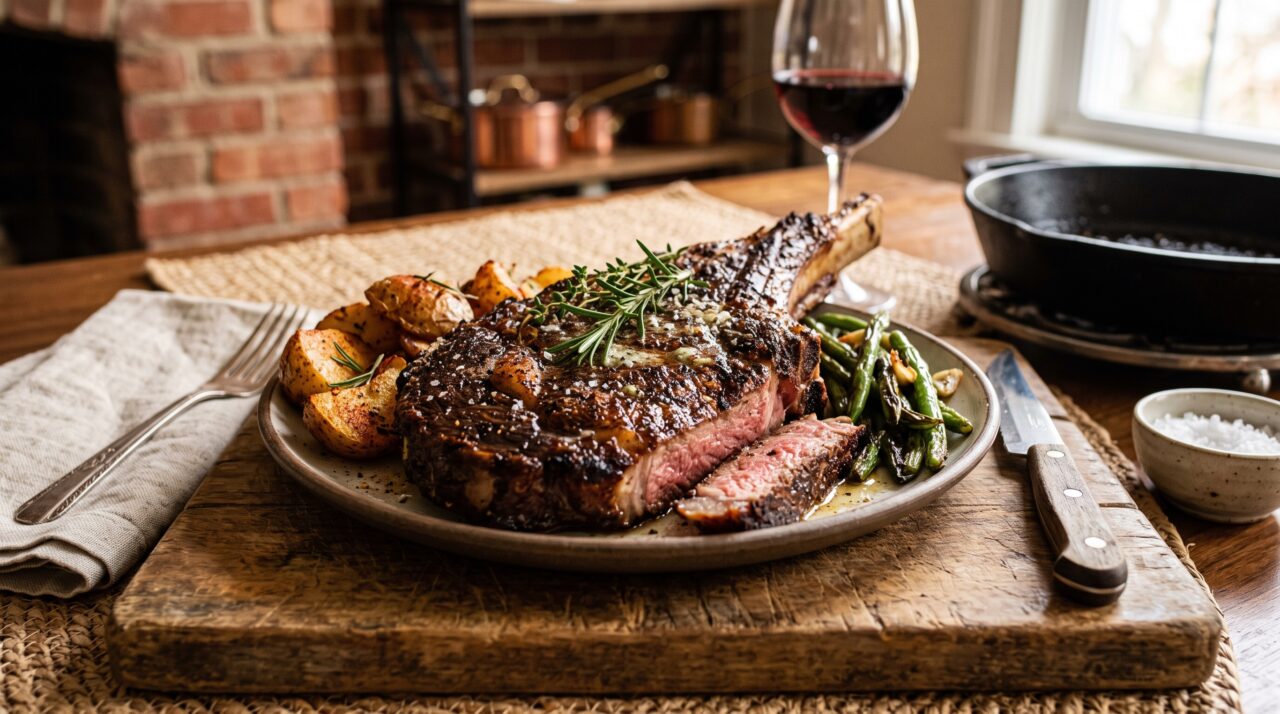

Cooking steak at home should feel exciting, not intimidating. Once you understand heat, timing, seasoning, and resting, you can turn a simple ribeye, New York strip, sirloin, or filet into a deeply browned, juicy steak without needing a grill.
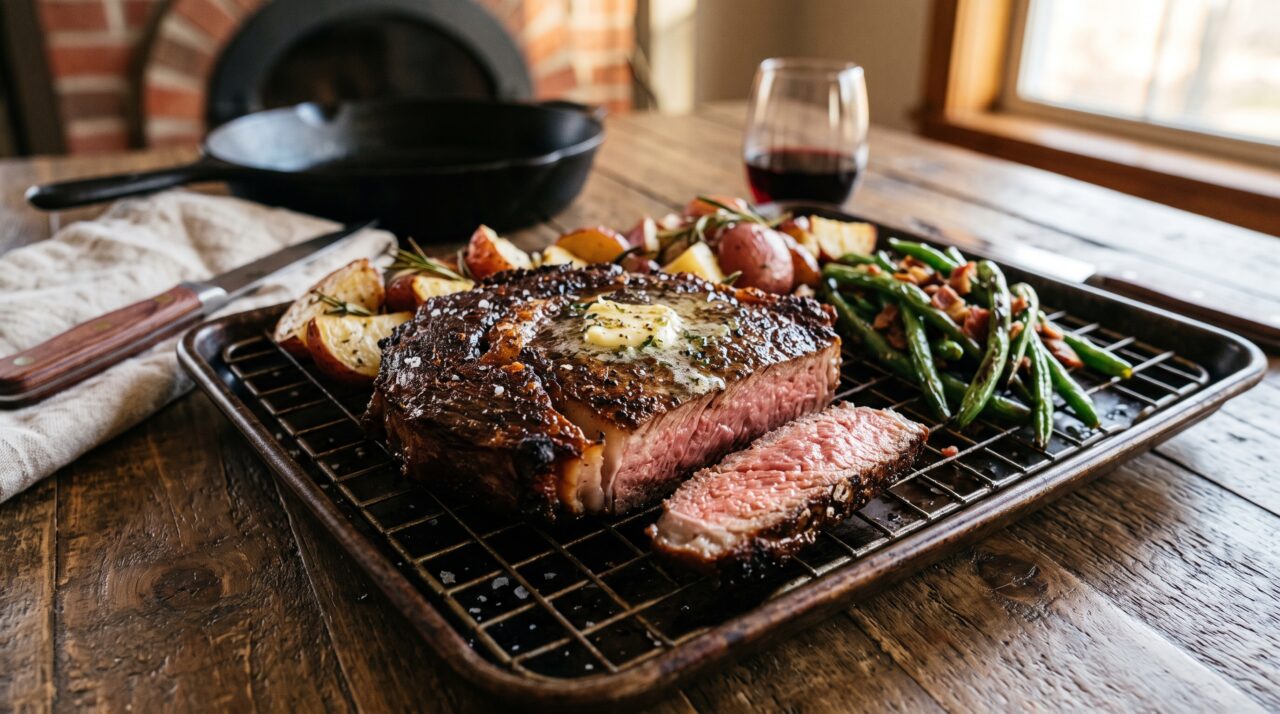
This guide explains how to cook steak in oven using reliable, practical methods that work in real American home kitchens. You will learn when to sear, when to broil, how to choose the right cut, what temperature to use, how long to cook each steak, and how to avoid the most common mistakes that make steak dry, gray, or chewy.
Why Oven-Cooked Steak Works So Well
The oven gives you something a stovetop alone cannot: controlled surrounding heat. A hot skillet creates the browned crust, while the oven gently finishes the center so the steak cooks evenly from edge to edge.
That combination is the secret behind many steakhouse-style results. You are not just frying meat in a pan; you are building layers of flavor through a dry surface, high heat, butter, aromatics, carryover cooking, and a proper rest.
The Best Cuts for Cooking Steak in the Oven
The best oven steaks are usually thick, well-marbled cuts that can handle a hard sear and still stay juicy inside. Ribeye, New York strip, filet mignon, T-bone, porterhouse, top sirloin, and thick-cut flat iron are all strong choices.
A steak that is at least 1 to 1.5 inches thick is easier to control than a very thin steak. Thin steaks can overcook before they develop a crust, while thicker steaks give you enough time to sear the outside and finish the inside gently.
What You Need Before You Start
To master how to cook steak in oven, you do not need fancy equipment, but a few tools make the process much more reliable. A cast iron skillet is ideal because it holds heat aggressively and creates a strong crust, but any oven-safe heavy skillet can work.
A meat thermometer is the biggest upgrade for consistent results. Guessing by time alone is risky because steak thickness, cut, starting temperature, pan material, oven accuracy, and bone-in versus boneless cuts all affect cooking speed.
| Tool or Ingredient | Why It Matters | Best Practical Choice |
|---|---|---|
| Thick steak | Cooks more evenly and stays juicy | 1 to 1.5 inches thick |
| Cast iron skillet | Holds high heat for a strong sear | 10- or 12-inch skillet |
| High-smoke-point oil | Helps browning without burning too fast | Avocado, canola, or vegetable oil |
| Kosher salt | Seasons deeply and evenly | Medium-grain kosher salt |
| Black pepper | Adds aroma and mild heat | Freshly cracked pepper |
| Thermometer | Prevents overcooking | Instant-read digital thermometer |
| Butter | Adds richness and browning flavor | Unsalted butter |
| Aromatics | Adds steakhouse-style depth | Garlic, thyme, rosemary, or shallot |
Bring the Steak Closer to Room Temperature
Taking steak out of the refrigerator before cooking helps reduce the temperature gap between the cold center and the hot surface. About 20 to 30 minutes on the counter is enough for most steaks, and it helps the meat cook more evenly.
Do not leave steak out for hours. The goal is not to make it warm; the goal is simply to take the hard refrigerator chill off the meat so the oven and skillet can work more predictably.
Dry the Surface Thoroughly
A dry steak browns better than a wet one because moisture turns into steam before the surface can sear. If the steak looks damp, press it firmly with paper towels until the exterior feels dry and slightly tacky.
This step is small but powerful. One of the biggest reasons home-cooked steak lacks a crust is that it goes into the pan with too much surface moisture, forcing the steak to steam instead of sear.
Season Simply but Generously
For most steaks, kosher salt and black pepper are enough. Salt enhances the beef, helps retain moisture, and supports browning, while pepper adds a familiar steakhouse aroma.
If you want more flavor, add garlic powder, onion powder, smoked paprika, rosemary, thyme, or a small amount of steak seasoning. Be careful with commercial blends because many contain a lot of salt, which can quickly make the steak taste over-seasoned.
The Best Oven Temperature for Steak
For a classic sear-then-bake method, 400°F is a reliable oven temperature. It is hot enough to finish the steak efficiently without drying it out too quickly.
For broiler-style cooking, the heat is more intense and comes from above, which can create a fast crust. Broiling works especially well when you want a charred exterior, but it requires closer attention because the line between browned and burned is thin.
How to Cook Steak in Oven with a Cast Iron Skillet
The most dependable method is to sear the steak first, then move the skillet into the oven. Heat the skillet until it is very hot, add a thin layer of oil, and sear the steak for 1 to 2 minutes per side until a deep brown crust forms.
After searing, add butter and aromatics, then transfer the skillet to a 400°F oven. Cook until the steak reaches your preferred internal temperature, then rest it before slicing.
Step-by-Step Oven Steak Method
Pat the steak dry, season it well, and preheat the oven to 400°F. Heat a cast iron skillet over medium-high to high heat until it is hot enough that the steak sizzles immediately on contact.
Sear both sides, add butter and herbs, then finish the steak in the oven. For most 1- to 1.5-inch steaks, oven time usually falls between 5 and 12 minutes, depending on thickness and target doneness.
Steak Doneness and Internal Temperature Guide
Temperature matters more than the clock. The safest way to learn how to cook steak in oven consistently is to measure the thickest part of the steak with an instant-read thermometer.
Pull the steak from the oven a few degrees before your final target because the internal temperature will continue to rise as it rests. This is called carryover cooking, and it can be the difference between medium-rare and medium.
| Doneness | Pull From Oven At | Final Temperature After Rest | Texture and Color |
|---|---|---|---|
| Rare | 120°F to 125°F | 125°F to 130°F | Cool red center, very soft |
| Medium-rare | 130°F to 135°F | 135°F to 140°F | Warm red center, juicy and tender |
| Medium | 140°F to 145°F | 145°F to 150°F | Warm pink center, firmer bite |
| Medium-well | 150°F to 155°F | 155°F to 160°F | Slight pink center, less juicy |
| Well-done | 155°F to 160°F | 160°F+ | Fully cooked, firmest texture |
How Long to Cook Steak in the Oven
Cooking time depends on steak thickness, oven heat, skillet temperature, and doneness preference. A 1-inch steak may need only a few minutes in the oven after searing, while a thick ribeye may need closer to 10 or 12 minutes.
Use time as a planning tool, not a final decision-maker. The thermometer gives the truth, especially when cooking expensive cuts where one extra minute can change the final texture.
| Steak Thickness | Rare | Medium-Rare | Medium | Medium-Well |
|---|---|---|---|---|
| 1 inch | 3 to 5 min | 5 to 7 min | 7 to 9 min | 9 to 11 min |
| 1.25 inches | 5 to 7 min | 7 to 9 min | 9 to 11 min | 11 to 13 min |
| 1.5 inches | 6 to 8 min | 8 to 11 min | 11 to 14 min | 14 to 16 min |
| 2 inches | 8 to 10 min | 10 to 14 min | 14 to 18 min | 18 to 22 min |
Searing Before Baking vs Baking Before Searing
The traditional method for how to cook steak in oven is searing first and baking second. This gives you a quick crust, a familiar workflow, and excellent results for most steaks.
The reverse-sear method does the opposite: the steak cooks slowly in the oven first, then gets seared at the end. Reverse searing is especially useful for very thick steaks because it creates a more even interior with less gray banding near the crust.
| Method | Best For | Main Advantage | Watch Out For |
|---|---|---|---|
| Sear then bake | 1- to 1.5-inch steaks | Fast and steakhouse-style | Can overcook thin steaks quickly |
| Reverse sear | 1.5- to 2-inch steaks | Very even doneness | Takes more time |
| Broil only | Thin steaks or quick meals | Fast browning | Easy to overcook |
| Oven only without sear | Hands-off cooking | Simple process | Less crust and flavor |
Reverse-Sear Method for Thick Steaks
For a reverse sear, place the seasoned steak on a rack over a baking sheet and cook it in a low oven, usually around 250°F to 275°F. Remove it when the internal temperature is about 10 to 15 degrees below your target.
Then sear the steak in a ripping-hot skillet for 45 to 60 seconds per side. This method is slower, but it gives you exceptional control and is one of the best approaches for thick ribeye, porterhouse, and filet mignon.
Broiling Steak in the Oven
Broiling uses intense top-down heat, making it a good option when you want a charred, grilled-style surface. Place the oven rack close to the broiler, preheat thoroughly, and use a broiler-safe pan or cast iron skillet.
Because broilers vary widely, stay close and watch carefully. A steak can go from beautifully browned to smoky and bitter very quickly under direct broiler heat.
Butter, Garlic, and Herbs for Steakhouse Flavor
Butter adds richness, but it can burn if used too early in a very hot skillet. That is why oil is better for the initial sear, while butter is best added after the crust starts forming.
Garlic, thyme, rosemary, and shallots bring aroma without overwhelming the beef. As the butter melts, spooning it over the steak helps coat the crust with flavor and gives the final steak a glossy, restaurant-style finish.
Why Resting the Steak Is Not Optional
Resting allows juices to redistribute through the meat instead of spilling across the cutting board. For most steaks, 5 to 10 minutes is enough.
A good quote to remember is: “The steak is not finished when it leaves the oven; it is finished when it has rested.” That simple habit improves tenderness, juiciness, and presentation more than almost any last-minute sauce.
How to Slice Steak Correctly
Always slice steak against the grain, which means cutting across the direction of the muscle fibers. This shortens the fibers and makes each bite feel more tender.
This matters most for cuts like flank, skirt, sirloin, and flat iron, but it helps nearly every steak. Even a perfectly cooked steak can seem chewy if it is sliced with the grain instead of against it.
Common Mistakes That Ruin Oven Steak
The biggest mistakes are starting with a wet steak, using a pan that is not hot enough, skipping the thermometer, and cutting into the steak immediately. Each of these causes a different problem, from weak browning to dry meat.
Another common error is overcrowding the pan. If steaks are packed too tightly, they release moisture and steam each other, which prevents the crust from forming properly.
How to Cook Steak in Oven Without a Cast Iron Skillet
You can still make a good oven steak without cast iron. Use a heavy stainless steel oven-safe skillet, carbon steel pan, or broiler-safe sheet pan that can tolerate high heat.
If your pan cannot go in the oven, sear the steak in the pan, then transfer it to a preheated baking dish or sheet pan. The crust may not be quite as strong, but the steak can still turn out juicy if you monitor the internal temperature.
How to Cook Steak in Oven Without Searing
If you want a simpler approach, you can cook steak in the oven without searing, but the result will be different. The meat can still be tender and juicy, but it will not have the same browned crust or deep roasted flavor.
For best results, use the broiler at the end or finish with a quick pan sear if possible. Browning is not just cosmetic; it creates savory flavor through the Maillard reaction, the chemical process responsible for that rich steakhouse crust.
Choosing Oil for Oven Steak
Use an oil with a higher smoke point, such as avocado, canola, grapeseed, or vegetable oil. These oils tolerate the heat needed for searing better than butter or many delicate finishing oils.
Olive oil can work at moderate heat, but for a very hot skillet, a neutral high-heat oil is usually more forgiving. Keep the layer thin because too much oil can splatter and make the steak greasy.
Seasoning Timing: Right Before or Ahead of Time
You can season steak right before cooking or salt it ahead of time. Salting 40 minutes to several hours in advance can improve seasoning depth and surface dryness, especially if the steak rests uncovered in the refrigerator.
If you are short on time, season immediately before cooking and proceed confidently. Avoid salting and then waiting only 10 minutes, because the salt may draw moisture to the surface before it has time to reabsorb.
Best Side Dishes for Oven Steak
A rich steak benefits from sides that balance it. Roasted potatoes, asparagus, green beans, mushrooms, creamed spinach, wedge salad, and roasted carrots all work beautifully.
For a lighter plate, serve steak with chimichurri, arugula salad, grilled vegetables, or a simple tomato-cucumber salad. The goal is contrast: something fresh, acidic, crisp, or earthy makes the beef taste even better.
Sauces and Finishes That Pair Well
A perfectly cooked steak does not need sauce, but the right finish can make it memorable. Compound butter, peppercorn sauce, red wine pan sauce, blue cheese butter, garlic herb butter, or chimichurri are all strong choices.
If you are learning how to cook steak in oven, start simple before adding complex sauces. Once the steak itself is properly seasoned and cooked, sauces become an enhancement rather than a cover-up.
Food Safety and Storage
Cooked steak should be refrigerated in an airtight container within a safe window after the meal. Most leftovers are best eaten within 3 to 4 days when stored properly in the refrigerator.
To reheat steak, use gentle heat rather than blasting it in the microwave. A low oven, covered skillet, or quick warm-up with butter can bring leftovers back without turning them tough.
Practical Case Study: A Weeknight Ribeye
Imagine a 1.25-inch boneless ribeye pulled from the refrigerator 25 minutes before dinner. It is patted dry, seasoned with kosher salt and pepper, seared for 90 seconds per side in cast iron, topped with butter and thyme, then baked at 400°F for about 7 minutes.
The thermometer reads 130°F, so the steak comes out and rests for 7 minutes. By the time it is sliced, it reaches a warm medium-rare, the crust is brown, and the center is juicy instead of raw or overdone.
Troubleshooting Your Steak
If your steak is gray, the pan was probably too cool or the surface was too wet. If it is burned outside and raw inside, the skillet may have been too aggressive for the steak thickness, or the oven finish was too short.
If the steak is dry, it was likely overcooked or sliced too soon. When learning how to cook steak in oven, every result teaches you something useful about timing, heat, thickness, and doneness.
FAQ
Can I learn how to cook steak in oven without a thermometer?
Yes, but a thermometer makes the process much more accurate. If you want reliable results while learning how to cook steak in oven, an instant-read thermometer is the simplest way to avoid overcooking.
What temperature should I use for oven steak?
A 400°F oven is a reliable choice for the sear-then-bake method. For reverse searing, use a lower oven temperature around 250°F to 275°F before finishing the steak in a hot skillet.
How long does steak take in the oven?
Most seared steaks need 5 to 12 minutes in a 400°F oven, depending on thickness and doneness. Thick steaks can take longer, while thin steaks may finish very quickly.
Can I cook steak in the oven from frozen?
You can, but it is harder to control and usually takes longer. For the best texture and browning, thaw the steak completely, dry it well, and then follow a standard method for how to cook steak in oven.
Should I use butter or oil for steak?
Use oil first because it handles high searing heat better. Add butter near the end for flavor, richness, and aroma.
Do I need to flip steak in the oven?
If you seared both sides before transferring the steak, flipping in the oven is not always necessary. For broiling, flipping is usually helpful because the heat comes strongly from one direction.
Why is my oven steak tough?
Tough steak usually comes from overcooking, choosing a lean cut, skipping the rest, or slicing with the grain. Cut selection and slicing technique matter almost as much as temperature.
Read more Temu Steaks: What You Need to Know Before You Buy
Conclusion
Learning how to cook steak in oven is mostly about controlling moisture, heat, and timing. Dry the steak thoroughly, season it well, sear it in a hot pan, finish it gently in the oven, check the internal temperature, and let it rest before slicing.
Once you understand that simple rhythm, steak becomes far less mysterious. Whether you prefer ribeye, strip steak, filet, sirloin, or porterhouse, the oven gives you a dependable path to a juicy center, a flavorful crust, and a meal that feels special without requiring a grill.