
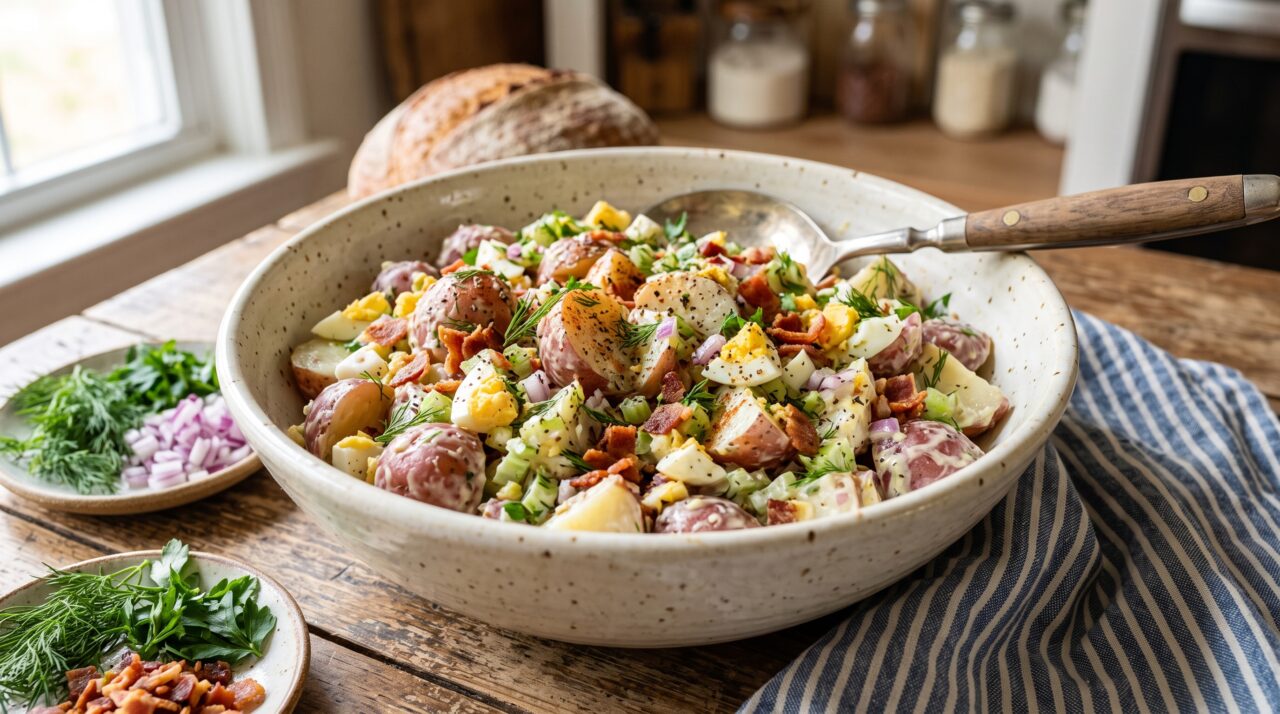

A great red potato salad recipe is one of those timeless dishes that never goes out of style. Whether you’re planning a summer barbecue, family picnic, holiday gathering, or simple weeknight dinner, this classic side dish brings together tender red potatoes, a creamy dressing, fresh herbs, and crunchy vegetables into a satisfying combination that complements almost any meal.
Unlike traditional potato salads made with russet potatoes, red potatoes have naturally thin skins, a creamy texture, and excellent moisture retention. They stay firm after cooking, making them ideal for potato salad. In this comprehensive guide, you’ll learn everything from choosing the right potatoes to mastering the dressing, avoiding common mistakes, exploring creative variations, and serving your salad like a professional.
Why Red Potatoes Make the Best Potato Salad
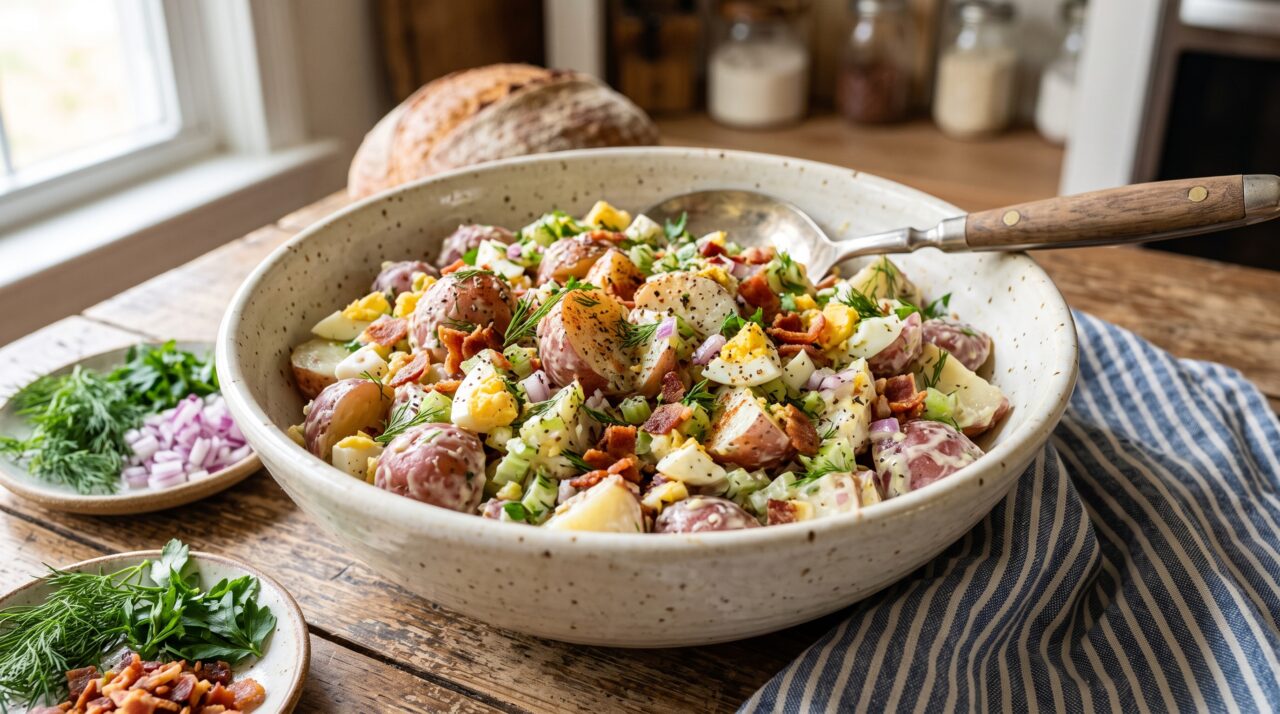
Red potatoes are classified as waxy potatoes, meaning they contain less starch than russet potatoes. Their firm structure helps them hold their shape during cooking, preventing the salad from becoming mushy while maintaining a pleasant bite.
Their naturally thin skin eliminates the need for peeling, saving preparation time while preserving nutrients and adding attractive color to the finished dish. The subtle sweetness of red potatoes also pairs beautifully with creamy dressings, fresh herbs, mustard, and crunchy vegetables.
Essential Ingredients for an Outstanding Red Potato Salad Recipe
The best potato salad begins with quality ingredients. Fresh produce, flavorful seasonings, and a balanced dressing create layers of texture and taste that elevate a simple recipe into something memorable.
Core ingredients typically include red potatoes, mayonnaise, Dijon mustard, celery, red onion, fresh dill, parsley, apple cider vinegar, hard-boiled eggs, salt, black pepper, and paprika. Optional additions such as bacon, pickles, green onions, or Greek yogurt allow you to personalize the flavor while maintaining the classic foundation.
Complete Ingredient Breakdown
| Ingredient | Purpose | Recommended Amount |
|---|---|---|
| Red potatoes | Creamy base | 2 pounds |
| Mayonnaise | Richness | ¾ cup |
| Dijon mustard | Tangy flavor | 2 tablespoons |
| Apple cider vinegar | Bright acidity | 1 tablespoon |
| Celery | Crunch | 2 stalks |
| Red onion | Mild sharpness | ½ cup diced |
| Hard-boiled eggs | Extra protein | 3 eggs |
| Fresh dill | Fresh herbal notes | 2 tablespoons |
| Fresh parsley | Color and freshness | 2 tablespoons |
| Salt | Flavor enhancement | To taste |
| Black pepper | Mild spice | To taste |
| Paprika | Garnish | 1 teaspoon |
Step-by-Step Preparation
Begin by washing the red potatoes thoroughly. Since their skins are thin and edible, there’s no need to peel them. Cut larger potatoes into evenly sized chunks so they cook uniformly.
Place the potatoes into cold salted water and bring to a gentle boil. Cook until they are fork-tender but not falling apart, usually around 12 to 15 minutes. Drain immediately and allow them to cool slightly before mixing with the dressing.
Making the Perfect Creamy Dressing
A balanced dressing should enhance the potatoes rather than overwhelm them. Combine mayonnaise, Dijon mustard, apple cider vinegar, chopped herbs, salt, pepper, and a touch of paprika for a smooth, flavorful mixture.
For even better flavor, toss the potatoes with a splash of vinegar while they’re still warm before adding the mayonnaise mixture. Warm potatoes absorb seasoning more effectively, resulting in a deeper, more evenly distributed taste throughout the salad.
Mixing the Salad Properly
Once the potatoes have cooled enough to handle, gently combine them with diced celery, chopped onions, sliced eggs, and fresh herbs. Fold everything together carefully to avoid breaking the potatoes.
Finally, add the dressing gradually, mixing just enough to coat every piece evenly. Refrigerate for at least one hour before serving to allow the flavors to blend and develop.
Common Mistakes to Avoid
One of the biggest mistakes is overcooking the potatoes. Soft, waterlogged potatoes quickly fall apart during mixing, creating a paste-like consistency instead of distinct, tender chunks.
Another common error is under-seasoning. Potatoes naturally absorb salt, so tasting and adjusting the seasoning after chilling ensures the final dish remains vibrant and flavorful.
Expert Tips for Better Flavor
Professional cooks often recommend seasoning potatoes while they’re warm because this allows flavors to penetrate more deeply. Fresh herbs should generally be added near the end to preserve their bright aroma and appearance.
Allowing the salad to rest overnight can significantly improve its flavor. During refrigeration, the dressing melds with the potatoes, herbs, and vegetables, creating a richer and more cohesive taste.
“Great potato salad isn’t about complicated ingredients—it’s about balancing texture, seasoning, and freshness.”
Delicious Flavor Variations
One of the strengths of this red potato salad recipe is its versatility. Add crispy bacon and shredded cheddar for a loaded potato salad, or incorporate chopped pickles and extra mustard for a deli-inspired version.
Mediterranean variations include olives, feta cheese, lemon juice, and oregano, while lighter versions substitute part of the mayonnaise with Greek yogurt for extra protein and a tangier finish.
Healthy Adaptations
If you’re looking for a lighter side dish, replace half of the mayonnaise with plain Greek yogurt. This simple swap reduces calories while increasing protein without sacrificing creaminess.
Additional vegetables like cucumbers, peas, radishes, or bell peppers increase fiber, vitamins, and texture, making the salad even more nutritious and colorful.
Best Herbs and Seasonings
Fresh dill remains the classic herb for potato salad because of its clean, slightly tangy flavor. Parsley adds freshness, while chives contribute a mild onion taste that complements the dressing beautifully.
Seasonings such as smoked paprika, garlic powder, onion powder, celery seed, and freshly ground black pepper can subtly enhance the overall flavor without overpowering the natural taste of the potatoes.
Serving Suggestions
This red potato salad recipe pairs exceptionally well with grilled chicken, smoked brisket, burgers, barbecue ribs, seafood, roasted vegetables, and sandwiches. Its creamy texture balances smoky, spicy, or grilled dishes particularly well.
For parties and picnics, serve the salad chilled in a large bowl garnished with paprika, chopped parsley, and extra dill. Keeping it cold maintains both food safety and optimal texture.
Storage and Food Safety
Store leftover potato salad in an airtight container in the refrigerator for up to four days. Avoid leaving mayonnaise-based salads at room temperature for more than two hours, especially during warm weather.
If preparing for outdoor gatherings, place the serving bowl inside a larger bowl filled with ice. This simple technique helps maintain a safe serving temperature throughout the event.
Choosing the Right Mayonnaise
Different mayonnaise brands produce subtle differences in flavor and texture. Full-fat mayonnaise creates the richest consistency, while avocado-oil mayonnaise offers a slightly lighter taste.
Some cooks blend mayonnaise with sour cream for additional tanginess or mix in a spoonful of whole-grain mustard for extra complexity. Small adjustments can personalize the dressing without changing its classic character.
Seasonal Uses Throughout the Year
Although many people associate potato salad with summer cookouts, it’s equally appropriate during autumn gatherings, winter holiday dinners, and spring celebrations. Its versatility makes it one of the most dependable side dishes year-round.
During colder months, herbs like rosemary or thyme can add seasonal warmth, while summer versions shine with fresh dill, parsley, and crisp vegetables straight from the garden.
Understanding Texture Balance
Texture is what separates an average potato salad from an exceptional one. Creamy potatoes, crisp celery, tender eggs, crunchy onions, and smooth dressing create multiple layers of mouthfeel in every bite.
Maintaining slightly firm potatoes ensures the salad retains structure even after refrigeration. Gentle mixing also preserves the visual appeal, making every serving look fresh and appetizing.
Why Homemade Always Wins
Store-bought potato salads often contain preservatives, excess sugar, and stabilizers that affect both flavor and texture. Homemade versions allow complete control over ingredient quality and seasoning.
Preparing the dish yourself also makes it easy to accommodate dietary preferences, reduce sodium, adjust acidity, or experiment with herbs and spices according to personal taste.
Pairing with Main Dishes
This red potato salad recipe complements grilled meats because its creamy richness balances smoky flavors beautifully. It’s equally delicious alongside baked fish, roasted chicken, or vegetarian burgers.
For casual entertaining, consider serving it with corn on the cob, fresh fruit salad, baked beans, and homemade coleslaw. Together, these dishes create a complete meal suitable for family gatherings or outdoor celebrations.
The Secret to Restaurant-Quality Results
Restaurants often achieve superior potato salad by paying attention to timing rather than adding exotic ingredients. Properly cooked potatoes, balanced seasoning, and adequate chilling time produce consistently excellent results.
Another professional technique involves tasting repeatedly throughout preparation. Adjusting salt, acidity, and herbs after refrigeration ensures every flavor remains balanced rather than allowing one ingredient to dominate.
Conclusion
A well-made red potato salad recipe is more than just a side dish—it’s a dependable favorite that fits nearly every occasion. With creamy red potatoes, fresh herbs, crisp vegetables, and a perfectly balanced dressing, this classic recipe delivers comforting flavor while remaining adaptable to countless variations.
Whether you’re preparing dinner for your family, hosting a neighborhood barbecue, or contributing to a holiday potluck, following these expert techniques will help you create a potato salad that’s flavorful, attractive, and consistently successful. Once you’ve mastered the fundamentals, you can confidently customize the recipe to suit your own tastes while preserving the creamy, satisfying character that makes red potato salad a beloved classic.
Read more Deezer vs Spotify: Which Streaming App Really Wins?
FAQ
How long should a red potato salad recipe chill before serving?
For the best flavor, chill the salad for at least one hour. Overnight refrigeration develops even deeper flavor and improves the overall texture.
Can I make a red potato salad recipe ahead of time?
Yes. Preparing it one day in advance often produces better flavor because the dressing fully absorbs into the potatoes.
Should red potatoes be peeled?
No. Their thin, tender skins add color, texture, nutrients, and help the potatoes maintain their shape during mixing.
Can I freeze potato salad?
Freezing is not recommended. Mayonnaise-based dressings separate after thawing, resulting in an unpleasant texture.
What is the best dressing for a red potato salad recipe?
A combination of mayonnaise, Dijon mustard, apple cider vinegar, fresh herbs, salt, pepper, and paprika creates a balanced dressing that complements red potatoes without overpowering them.
How can I make this potato salad healthier?
Replace part of the mayonnaise with plain Greek yogurt, add extra vegetables, and use fresh herbs generously for a lighter yet flavorful version.
Why are my potatoes falling apart?
They were likely overcooked. Simmer the potatoes gently and remove them as soon as they become fork-tender to maintain their structure.
What proteins pair best with this red potato salad recipe?
Grilled chicken, steak, pulled pork, salmon, shrimp, burgers, barbecue ribs, and roasted turkey all pair wonderfully with this creamy potato salad.