
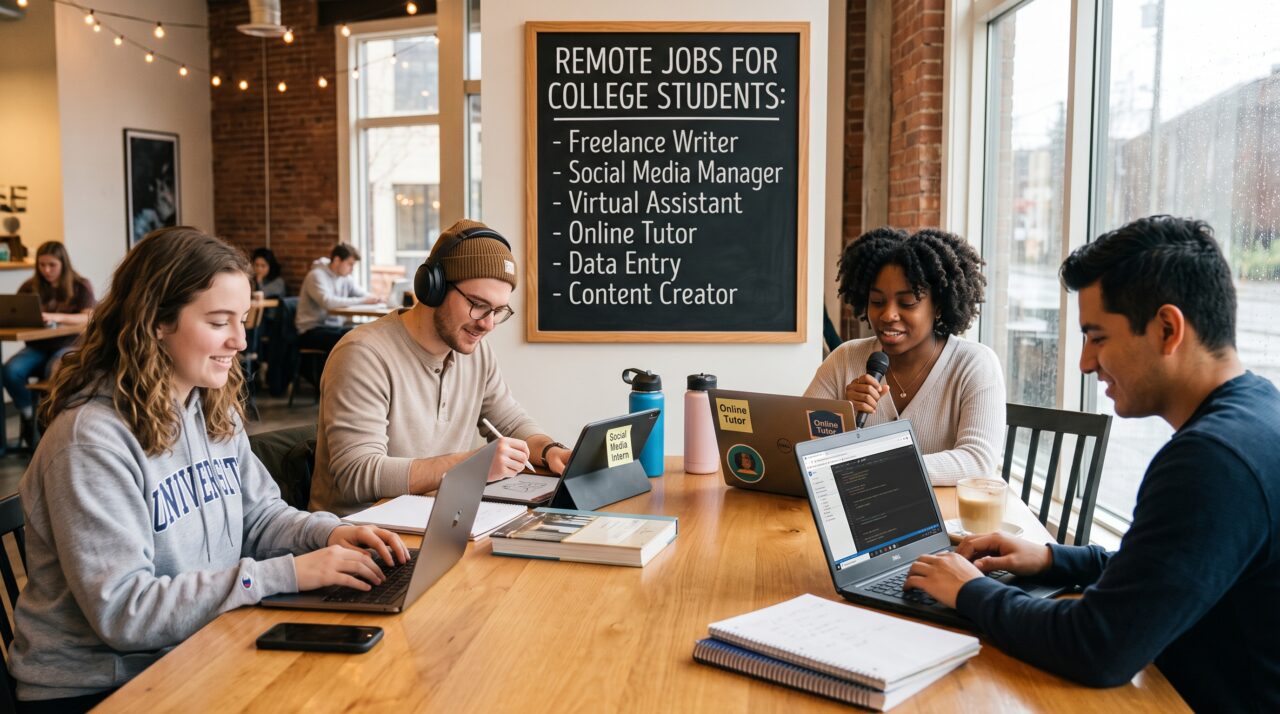

Finding remote jobs for college students with no experience can feel challenging when every listing seems to ask for previous work history. The reality is more encouraging: many entry-level employers care more about reliability, communication, digital skills, and a willingness to learn than a long résumé.
The key is knowing which roles genuinely welcome beginners, how to present your existing skills, and where to search without wasting time on questionable opportunities. With the right strategy, your coursework, campus activities, volunteer work, and personal projects can become credible evidence that you are ready to work remotely.
Why Remote Work Is a Strong Option for College Students
Remote jobs for college students with no experience can offer something traditional part-time work often cannot: flexibility. Students may be able to work around lectures, exams, internships, and extracurricular commitments while gaining professional experience from home or another suitable location.
Remote work also builds skills that transfer across industries. Writing professional emails, managing deadlines, collaborating through digital platforms, organizing information, and communicating clearly are valuable whether your eventual career is in marketing, finance, technology, education, healthcare, or another field.
What Employers Actually Look for in Entry-Level Remote Candidates
Many beginners assume employers are primarily looking for years of experience. For entry-level remote positions, however, hiring managers often prioritize dependable communication, attention to detail, self-management, basic technology skills, and evidence that a candidate can complete assignments without constant supervision.
Your application should therefore translate everyday experience into workplace language. A student who coordinated a group project demonstrated collaboration; someone who managed a demanding course schedule showed time management; a person who ran a club’s social media account may already have practical content or marketing experience.
Best Remote Jobs for College Students With No Experience

The best entry-level opportunities are generally roles with clear processes, manageable training requirements, and skills that can be learned quickly. Common options include virtual assistant work, customer support, online tutoring, data entry, transcription, content moderation, research assistance, social media support, and beginner freelance services.
The right choice depends on your strengths and schedule. A strong writer might explore proofreading or content assistance, while an organized student could pursue administrative support. Someone comfortable speaking with people may prefer customer service, sales development, or online tutoring.
| Remote Role | Typical Beginner Skills | Schedule Flexibility | Growth Potential | Best Fit |
|---|---|---|---|---|
| Virtual Assistant | Organization, email, spreadsheets | High | High | Organized students |
| Customer Support | Communication, patience | Medium to High | High | People-oriented students |
| Online Tutor | Subject knowledge, explanation | High | Medium to High | Strong academic performers |
| Data Entry | Accuracy, basic computer skills | Medium | Low to Medium | Detail-oriented beginners |
| Social Media Assistant | Writing, creativity, platform knowledge | High | High | Marketing-minded students |
| Content Assistant | Research, writing, editing | High | High | Strong communicators |
| Transcription | Listening, typing, accuracy | High | Medium | Fast and careful typists |
| Research Assistant | Research, documentation, analysis | Medium | High | Academic or analytical students |
| Sales Development Representative | Communication, persistence | Medium | Very High | Confident communicators |
| User Testing | Observation, written feedback | Very High | Low | Students seeking occasional work |
The table highlights an important distinction: not every beginner-friendly position offers the same career value. A flexible microtask may help you earn extra money, while a virtual assistant, research, content, or customer success role could produce stronger résumé evidence and professional references.
How to Find Legitimate Entry-Level Remote Opportunities
When searching for remote jobs for college students with no experience, focus on reputable job boards, company career pages, university career centers, and established staffing platforms. Search using combinations such as “remote entry-level,” “work from home student,” “part-time remote,” and “no experience required,” then evaluate each listing carefully.
Legitimate employers typically explain the role, responsibilities, hiring process, and compensation clearly. Be cautious when a company asks you to pay upfront for training, purchase equipment from an unknown vendor, deposit a check and return money, or provide sensitive financial information before a formal hiring process.
How to Turn College Experience Into Job-Ready Evidence
You may have more relevant experience than you think. Coursework can demonstrate research and analytical ability, group assignments can show collaboration, presentations can demonstrate communication, and student organizations can reveal leadership, planning, or event-management skills.
Create a small portfolio when possible. A marketing student could prepare a sample social media campaign, an aspiring writer could publish two or three polished articles, and an aspiring data analyst could build a simple spreadsheet project. These examples reduce the employer’s uncertainty because they show what you can actually do.
How to Build a Résumé When You Have No Formal Experience
A beginner résumé should lead with relevance rather than apologizing for a lack of employment history. Use a concise professional summary, highlight technical and transferable skills, and describe academic projects or volunteer work using action-oriented language that connects directly to the target position.
For example, instead of writing “Worked on a class presentation,” describe the outcome: “Collaborated with four students to research and present a 20-slide analysis, meeting a strict deadline.” Specific details make ordinary student experiences sound more credible because they demonstrate responsibility, teamwork, and execution.
The Skills That Make Remote Candidates More Competitive
Remote employers value skills that help people operate independently. Clear written communication, spreadsheet proficiency, video conferencing, task management, online research, document formatting, and basic troubleshooting can significantly improve your prospects for entry-level work.
You do not need to master every software platform before applying. Learn the tools that appear repeatedly in your target job listings, then practice through free tutorials and small projects. Familiarity with platforms such as Google Workspace, Microsoft Office, Slack, Zoom, Canva, or common project-management tools can make your application more convincing.
“Success is where preparation and opportunity meet.” — Bobby Unser
The principle applies especially well to early-career job searches. Preparation does not guarantee an offer, but it increases the likelihood that you can recognize a good opportunity, submit a strong application, and perform confidently when given a chance.
How to Create a Strong Application Without Experience
A common mistake is sending the same generic résumé to every employer. Instead, read the job description closely and identify the three or four capabilities that appear most important. Then adjust your résumé and cover letter so those capabilities are supported by concrete examples from your education, projects, volunteering, or personal work.
Your application should answer the employer’s underlying question: “Can this person be trusted to deliver remotely?” Demonstrate punctuality, responsiveness, attention to detail, and initiative. If you have completed an independent project or taught yourself a relevant skill, explain what you built, why you built it, and what the result was.
How to Avoid Remote Job Scams
The growing demand for work-from-home opportunities has also created opportunities for scammers. A professional-looking website or polished job advertisement does not automatically prove that an employer is legitimate, so investigate the company independently before sharing personal information.
Watch for unrealistic earnings, vague job descriptions, pressure to act immediately, requests for payment, cryptocurrency-related instructions, or interviews conducted entirely through suspicious messaging accounts. Verify the employer’s official website, search for independent information about the organization, and confirm that the position appears through a credible hiring channel.
How Much Can Beginners Expect to Earn?
Pay varies substantially based on location, employer, job category, hours, and whether the role is employment or freelance work. A beginner administrative position may pay differently from specialized tutoring, technical support, sales, or freelance writing, so avoid relying on a single salary figure when evaluating opportunities.
Instead, compare compensation with the responsibilities and learning potential. A slightly lower-paying role that provides structured training, meaningful projects, and a professional reference may be more valuable early in your career than a higher-paying gig that offers little transferable experience.
How to Balance Remote Work With College
Remote jobs for college students with no experience are most sustainable when students choose schedules they can realistically maintain. Before accepting an offer, consider your class timetable, commute requirements for occasional meetings, exam periods, assignment deadlines, and the number of hours you can consistently commit.
Set clear boundaries from the beginning. Use a calendar to block study and work periods, communicate availability honestly, and avoid accepting more hours than you can handle. Employers generally prefer a dependable employee who consistently works a manageable schedule over someone who promises broad availability and repeatedly misses deadlines.
A Simple Strategy for Landing Your First Remote Role
Start by selecting one or two job categories rather than applying randomly to everything. Research the skills those roles require, improve your résumé around those skills, create one or two relevant portfolio samples, and then apply consistently to positions that genuinely match your capabilities.
Treat the first role as a launchpad rather than a final destination. Remote jobs for college students with no experience can help you develop professional references, measurable achievements, and stronger skills that make future applications easier and more competitive.
Common Mistakes That Reduce Your Chances of Getting Hired
One frequent mistake is focusing exclusively on the phrase “no experience required.” Some employers may accept beginners but still expect candidates to demonstrate basic competence. Applying without tailoring your résumé, proofreading your materials, or researching the company can make an otherwise capable applicant appear unprepared.
Another mistake is underestimating communication. Remote teams cannot easily observe your work habits in person, so responsiveness and clarity matter. A concise application, professional email address, thoughtful interview answers, and timely follow-up can collectively create a stronger impression than an impressive list of skills without supporting evidence.
What the Future Looks Like for Student Remote Work
Remote and hybrid work have changed how early-career professionals can gain experience, but the market is also more competitive than it was during the rapid expansion of work-from-home hiring. Students who combine flexibility with practical skills are increasingly better positioned than applicants who rely solely on a desire to work remotely.
The most durable strategy is to develop skills that employers can evaluate through outcomes. Build a portfolio, complete small projects, document measurable results, and learn to communicate your contribution clearly. The goal is not simply to find work from home; it is to build professional capital that continues to benefit you after graduation.
Final Takeaway
Remote jobs for college students with no experience are accessible when you approach the search as a skills-and-evidence problem rather than an experience problem. You do not need a perfect résumé to begin, but you do need a credible reason for an employer to trust you with real responsibilities.
Start with roles that match your existing strengths, strengthen one or two high-value skills, create practical examples of your work, and apply selectively. With persistence and a professional approach, your first remote position can become the foundation for internships, freelance opportunities, stronger credentials, and a full-time career after college.
Read more Vegan Desserts Near Me: Best Guide to Finding Plant-Based Sweets Locally
Frequently Asked Questions
Are remote jobs for college students with no experience really available?
Yes. Entry-level opportunities exist in customer support, virtual assistance, tutoring, content support, research, sales, and other areas. The challenge is identifying legitimate employers and demonstrating that your existing skills transfer to the role.
What are the easiest remote jobs for beginners to get?
Customer support, virtual assistance, data entry, online tutoring, and certain administrative roles can be accessible to beginners. However, “easy to enter” does not always mean “easy to perform,” so choose work that fits your communication style, technical ability, and schedule.
How can I get remote jobs for college students with no experience if I have never worked before?
Use coursework, projects, volunteering, student organizations, and independent work as evidence of your capabilities. Build a targeted résumé and, when practical, create a small portfolio that demonstrates the skills required for the position.
Can I work remotely while studying full time?
Yes, provided the role’s schedule fits your academic commitments. Part-time and flexible positions are often easier to manage than jobs requiring fixed full-time availability, particularly during examination periods and intensive semesters.
How do I know whether a remote job is legitimate?
Research the company independently, verify the official hiring channel, examine the job description carefully, and avoid employers requesting upfront payments or sensitive information before a legitimate hiring process. If an offer seems unusually easy or financially unrealistic, investigate before proceeding.
Should college students prioritize pay or experience?
The answer depends on your circumstances, but early-career students often benefit from considering both. A role that provides useful skills, measurable achievements, professional references, or industry exposure can create long-term value beyond the immediate paycheck.
What should I do if I keep applying but receive no interviews?
Review your résumé against the specific jobs you are targeting. Strengthen your portfolio, improve the skills most frequently requested in job descriptions, personalize applications, and consider whether you are applying for roles that genuinely match your current abilities.
For more click here