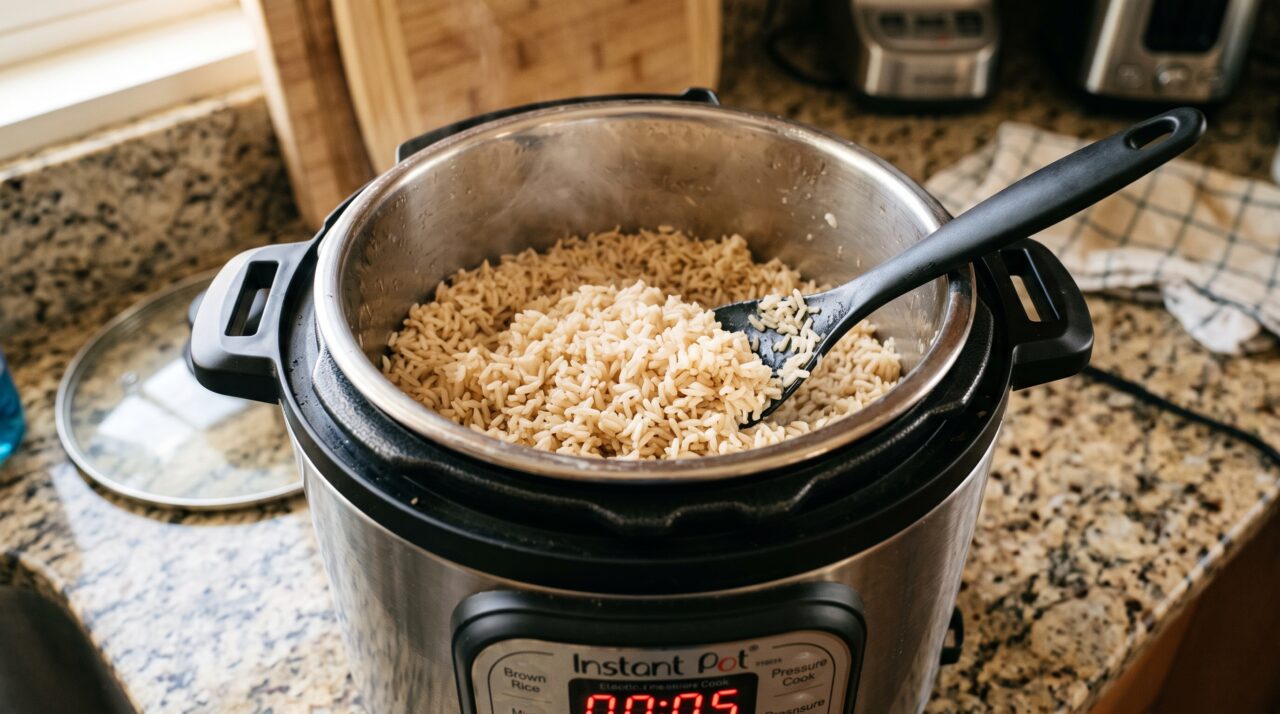

Cooking brown rice in an Instant Pot solves a problem that has frustrated home cooks for years: getting tender, evenly cooked grains without babysitting a pot on the stove. Brown rice is notoriously stubborn, often turning out crunchy in the center or gummy on the outside when made the traditional way. The pressure cooking method changes that equation entirely, delivering consistent, restaurant-quality rice with almost no effort. This guide walks through everything you need to know, from ratios and timing to common mistakes and flavor upgrades.
Why Brown Rice in an Instant Pot Works So Well
Brown rice still has its bran layer intact, which makes it denser and slower to cook than white rice. On the stovetop, that density often leads to uneven results, since the outer grains soften before the inside ever gets a chance to hydrate. An Instant Pot solves this by trapping steam and building consistent pressure, which pushes moisture into every grain at the same rate.
The result is rice that cooks from the inside out rather than the outside in. This is the core reason brown rice in an Instant Pot consistently outperforms stovetop methods, especially for anyone who has struggled with undercooked centers or scorched bottoms. Once you understand this mechanism, the rest of the process becomes intuitive rather than a guessing game.
The Ideal Water-to-Rice Ratio
Getting the ratio right is the single biggest factor in successful brown rice in an Instant Pot. Most recipes call for a 1:1.25 ratio, meaning one cup of rice to one and a quarter cups of water, though some cooks prefer closer to 1:1.5 for softer grains. Because pressure cooking retains nearly all the moisture instead of letting it evaporate, brown rice needs noticeably less liquid than it would on the stove.
Too much water leaves you with a sticky, porridge-like texture, while too little can leave the rice slightly firm even after a full cooking cycle. A reliable starting point is one cup of long-grain brown rice to one and a quarter cups of water, adjusted slightly based on your specific Instant Pot model and altitude. Once you find your sweet spot, it becomes a repeatable formula every single time.
Step-by-Step Method for Cooking Brown Rice
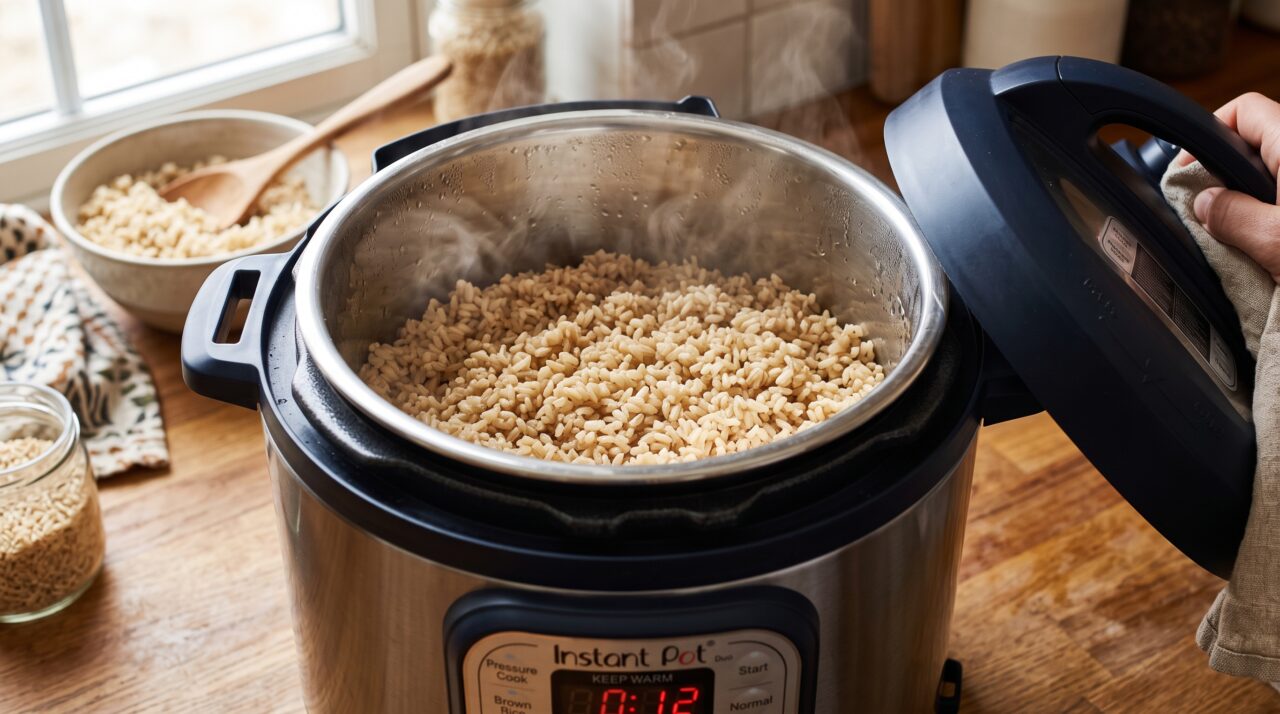
Start by rinsing the rice under cold water until the runoff turns mostly clear, which removes excess surface starch and prevents clumping. Add the rinsed rice, water, a small pinch of salt, and an optional teaspoon of oil directly into the inner pot, then give it a quick stir so nothing sticks to the bottom.
Seal the lid, set the valve to sealing, and select manual or pressure cook on high for twenty-two to twenty-four minutes. This timing is the backbone of any reliable method for brown rice in an Instant Pot, and it holds true whether you’re making a small batch or doubling the recipe, as long as you don’t exceed the pot’s fill line.
Also check Step-by-Step Method for Cooking Brown Rice
Natural Release Versus Quick Release
After the cooking cycle ends, resist the urge to immediately vent the steam. Allowing a natural pressure release for ten to fifteen minutes lets the rice finish steaming gently, which firms up the texture and prevents the mushiness that comes from releasing pressure too abruptly.
Once that resting period passes, you can manually release any remaining pressure before opening the lid. Skipping this step is one of the most common reasons people end up with a wetter-than-expected batch of brown rice in an Instant Pot, so patience here genuinely pays off in texture.
Common Mistakes That Ruin the Texture
The most frequent misstep is treating brown rice like white rice and using the same water ratio or cooking time, which almost always leads to undercooked results. Brown rice needs both more time under pressure and a full natural release to properly soften its fibrous outer layer.
Another common error is skipping the rinse step, which leaves excess starch that makes the finished rice gummy and clumped together. Fluffing the rice with a fork immediately after opening the lid also matters more than people expect, since it releases trapped steam and keeps individual grains distinct rather than compressed.
Nutritional Benefits Worth Knowing
Brown rice retains its bran and germ layers, which means it holds onto fiber, B vitamins, magnesium, and manganese that get stripped away during the milling process used for white rice. A single cup of cooked brown rice contains roughly three and a half grams of fiber, which supports digestion and helps maintain steadier blood sugar levels.
This nutritional density is part of why so many home cooks specifically seek out brown rice in an Instant Pot rather than settling for the more convenient white rice option. Preserving these nutrients through gentle pressure cooking, rather than aggressive boiling that can leach out water-soluble vitamins, makes the method both practical and genuinely beneficial for everyday meals.
Comparing Cooking Methods
The table below breaks down how pressure cooking stacks up against the two most common alternatives, giving a clear picture of why so many people have switched their routine entirely.
| Method | Average Time | Texture Consistency | Hands-On Effort |
|---|---|---|---|
| Instant Pot | 22–24 minutes plus natural release | Very consistent | Minimal |
| Stovetop | 40–50 minutes | Variable, prone to scorching | High |
| Standard Rice Cooker | 45–60 minutes | Consistent but slower | Low |
As the comparison shows, brown rice in an Instant Pot delivers a meaningful time savings over the stovetop while requiring far less monitoring, making it the preferred choice for weeknight cooking and meal prep alike.
Flavor Variations and Add-Ins
Plain brown rice is a fantastic base, but a few small additions can transform it into something closer to a side dish worth talking about. Swapping some or all of the water for low-sodium broth adds depth, while a bay leaf or smashed garlic clove dropped in before cooking infuses subtle aromatics throughout.
For a heartier variation, stir in sautéed onions, a splash of soy sauce, or toasted sesame oil once the rice finishes cooking. These small adjustments don’t change the fundamental method for brown rice in an Instant Pot, but they do make it far more versatile across different cuisines and meal styles.
Storing and Reheating Leftovers
Cooked brown rice keeps well in an airtight container in the refrigerator for up to five days, making it an excellent candidate for batch cooking and meal prep. For longer storage, portioned freezer bags work well and can be reheated directly from frozen with a splash of water.
To reheat, a microwave with a damp paper towel over the bowl restores moisture without drying out the grains, while a quick steam on the stovetop works just as well for larger portions. Because brown rice in an Instant Pot cooks evenly to begin with, it also reheats more predictably than rice that was unevenly cooked the first time around.
Troubleshooting Texture Problems
If your rice comes out too firm, the most likely culprits are insufficient water or skipping the natural release period. Adding an extra two to three minutes of cook time or a slightly higher water ratio on the next batch usually resolves this without much trial and error.
If the rice turns out mushy or clumped, cut back on water slightly and double-check that the rinse step wasn’t skipped. According to culinary educator and cookbook author Alton Brown, “Rice is a science experiment you eat,” a reminder that small, deliberate adjustments to ratio and timing consistently produce better results than guesswork alone.
Final Thoughts on Mastering This Method
Once you’ve made brown rice in an Instant Pot a few times, the process becomes second nature, requiring little more than rinsing, measuring, and walking away for half an hour. The consistency this method offers is difficult to replicate with any other cooking approach, which is exactly why it has become a staple technique in so many kitchens.
Whether you’re meal prepping for the week or simply want a reliable side dish for dinner, this method removes the guesswork that has historically made brown rice intimidating. With the ratios and timing outlined above, perfectly cooked grains are consistently within reach.
Read more Best Personal Loans With Cosigner: A Complete Guide to Rates, Lenders, and Approval Odds
Frequently Asked Questions
How long does it take to cook brown rice in an Instant Pot?
Brown rice in an Instant Pot typically takes twenty-two to twenty-four minutes on high pressure, plus an additional ten to fifteen minutes for natural release.
What is the best water-to-rice ratio for brown rice in an Instant Pot?
A ratio of one cup of rice to one and a quarter cups of water works well for most Instant Pot models, though some cooks prefer slightly more liquid for softer results.
Do I need to rinse brown rice before pressure cooking it?
Yes, rinsing removes excess surface starch and helps prevent the rice from turning gummy or clumping together during cooking.
Can I double the recipe when making brown rice in an Instant Pot?
Yes, as long as the total volume stays below the maximum fill line, doubling the rice and water proportionally works without changing the cook time.
Why does my Instant Pot brown rice come out too wet or too dry?
Inconsistent results are usually caused by an incorrect water ratio or skipping the natural release step, both of which are easy to correct on the next attempt.