
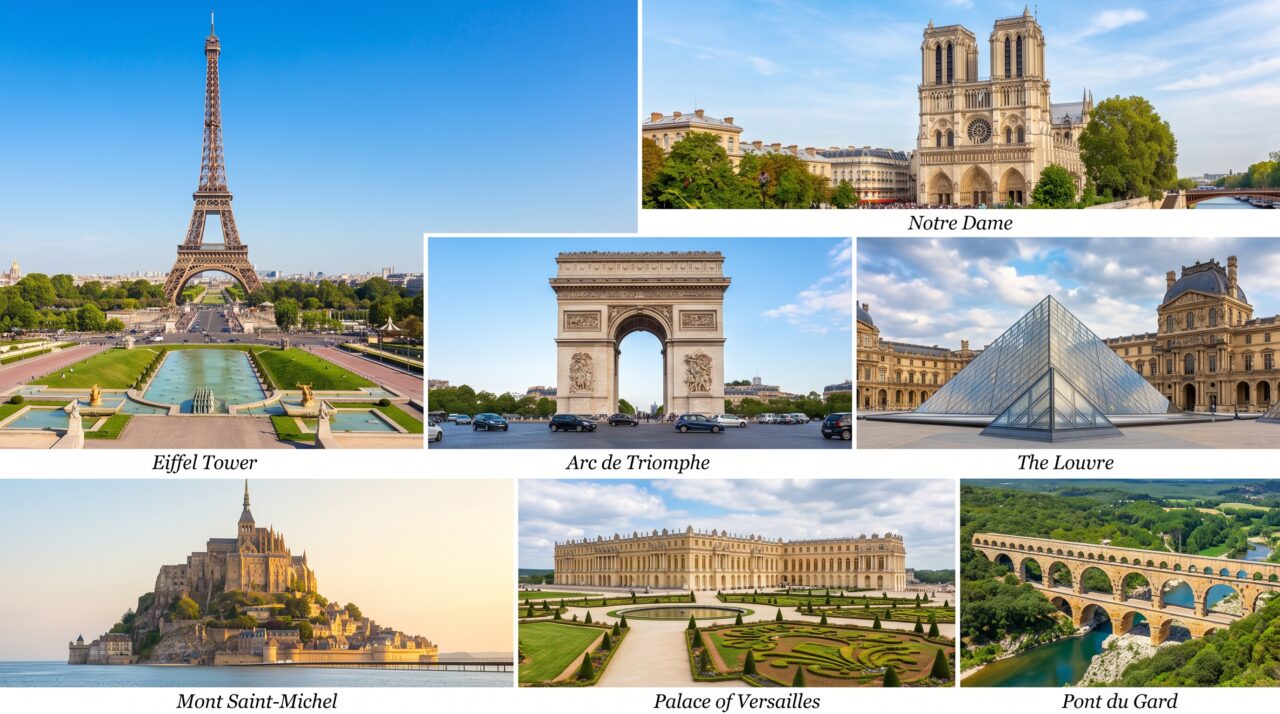

France is a country where history, art, and architecture collide in spectacular fashion. From the moment you step off a plane, you sense that the famous landmarks in France are not simply tourist stops but living chapters of a national story that spans centuries. Whether you are drawn to the romance of Paris or the quiet grandeur of the countryside, this guide walks you through the sites that define the nation and explains why they continue to captivate millions of visitors every year.
Beyond their postcard appeal, these sites reveal how deeply architecture, politics, and everyday life have always been intertwined in France. Understanding that connection turns a simple sightseeing list into a genuinely rewarding journey through the country’s layered past.
Why France Is Home to the World’s Most Famous Landmarks
Few countries can claim a cultural footprint as vast as France. Centuries of monarchy, revolution, artistic movements, and architectural innovation have left behind a collection of structures that rank among the most photographed and studied in the world. This density of heritage is precisely why the famous landmarks in France attract such a diverse mix of historians, architects, artists, and casual travelers alike.
What makes these sites remarkable is not just their age or scale, but the way they reflect shifting eras of French identity. A Gothic cathedral, a Renaissance chateau, and a modernist glass pyramid can all exist within a short train ride of one another, telling a layered story of continuity and reinvention that few nations can match, and giving travelers an unusually condensed tour through centuries of European design in a single trip.
The Eiffel Tower: An Icon Among France’s Famous Landmarks
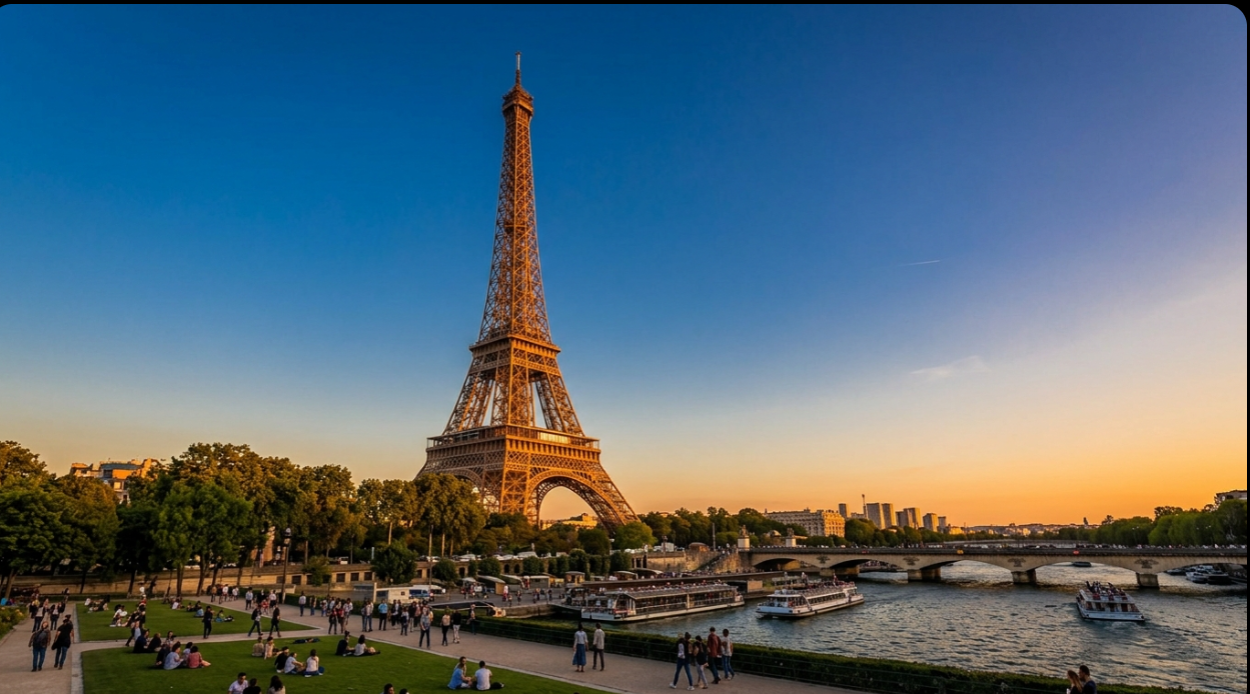
No discussion of the famous landmarks in France would be complete without the Eiffel Tower. Built for the 1889 World’s Fair, it was initially criticized by some Parisian artists and intellectuals who viewed it as an industrial eyesore. Today, it stands as the most recognizable silhouette in the country and a global symbol of French engineering and ambition.
Beyond its visual impact, the tower offers a genuine lesson in resilience. It was nearly dismantled in 1909 before its usefulness as a radio transmission tower saved it from demolition. That practical second life is a reminder that even the most celebrated monuments often survive through adaptation rather than sentiment alone, and it still functions as a working broadcast antenna to this day.
The Louvre: Where Art and Architecture Meet
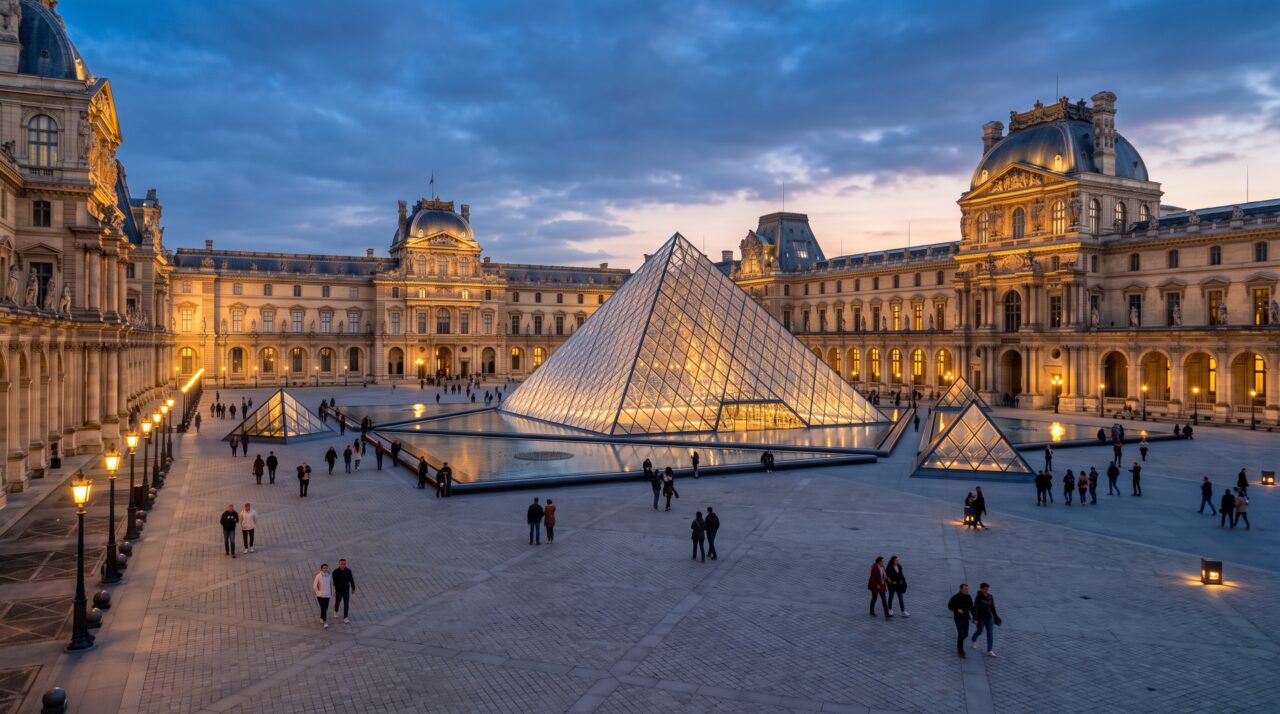
The Louvre Museum is more than a repository of masterpieces; it is itself an architectural marvel that blends a former royal palace with I.M. Pei’s striking glass pyramid entrance. As one of the most visited museums on the planet, it plays a central role in any conversation about the famous landmarks in France.
Housing works like the Mona Lisa and the Venus de Milo, the Louvre demonstrates how a single site can serve as both a historical artifact and a functioning cultural institution. Visitors often underestimate how much time is needed here, and seasoned travelers recommend focusing on a handful of wings rather than attempting to see everything in one visit, since walking the entire museum in a single day is nearly impossible even for dedicated art lovers.
Notre-Dame Cathedral: Gothic Grandeur Reborn
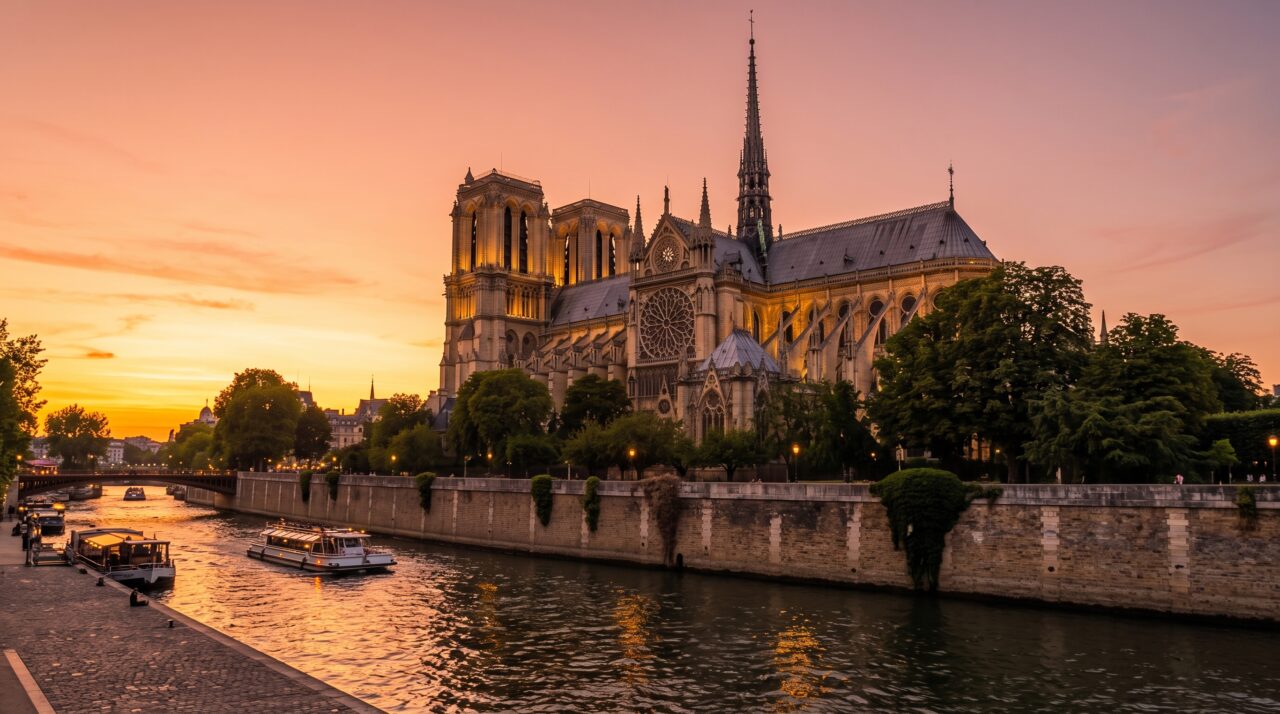
Notre-Dame de Paris has long stood among the most famous landmarks in France, its flying buttresses and rose windows representing the pinnacle of Gothic design. The 2019 fire that damaged much of its roof and spire became a moment of national mourning, followed by an extraordinary restoration effort involving thousands of skilled artisans.
The cathedral’s reopening has renewed public fascination with traditional craftsmanship, from stone carving to timber framing techniques rarely used at this scale in modern construction. For architecture enthusiasts, Notre-Dame now represents not only medieval mastery but also a rare, well-documented case study in large-scale historic preservation, complete with detailed public records of how each stage of the rebuilding was carried out.
Palace of Versailles: A Monument to Royal Ambition
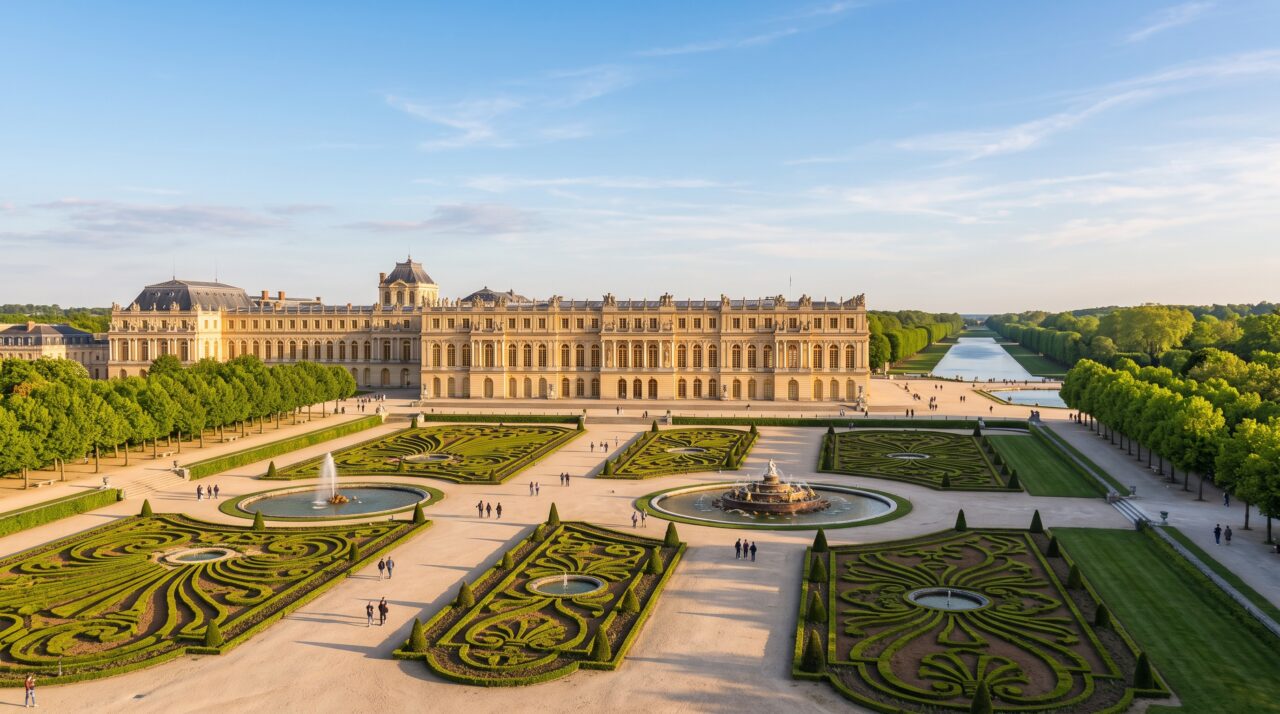
Few structures capture the excess and artistry of the French monarchy quite like the Palace of Versailles. Its Hall of Mirrors, sprawling gardens, and opulent state rooms were designed to project absolute power, and the palace remains one of the most studied examples of Baroque architecture in Europe.
Versailles also offers a practical lesson for modern visitors: the gardens alone can take an entire day to explore properly. Many travelers make the mistake of pairing Versailles with another major site on the same day, only to find themselves rushing through one of the most detailed landscapes in French history, missing the fountain shows and quieter groves that make a slower visit so worthwhile.
Mont Saint-Michel: A Landmark Beyond the Capital
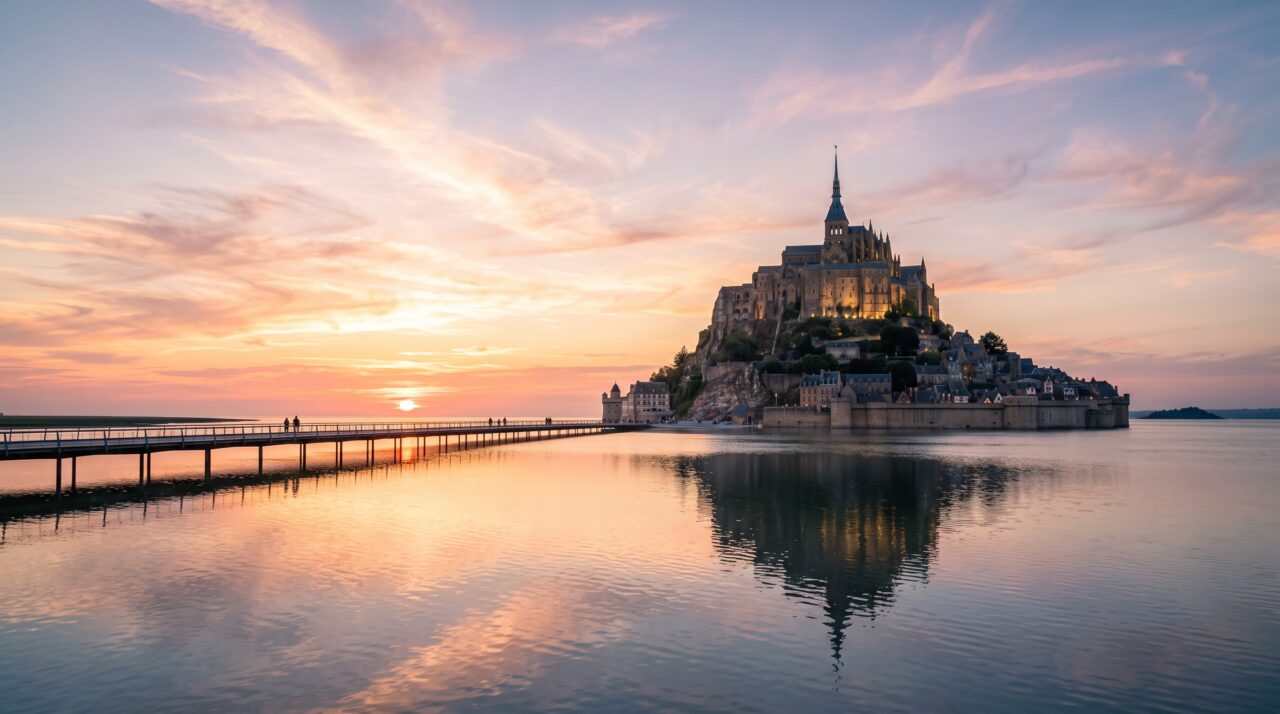
While Paris dominates most itineraries, some of the most famous landmarks in France exist far from the capital. Mont Saint-Michel, a fortified island abbey off the Normandy coast, is a striking example. Its silhouette rising from tidal flats has inspired painters and pilgrims for nearly a thousand years.
The site’s tides are dramatic enough to reshape the surrounding landscape twice a day, occasionally cutting off the causeway that connects it to the mainland. This natural rhythm adds a layer of unpredictability that few other monuments in the world can offer, making a visit feel more like an event than a simple sightseeing stop, and checking tide schedules in advance is essential for anyone planning to walk across the bay.
The French Riviera and Southern Treasures
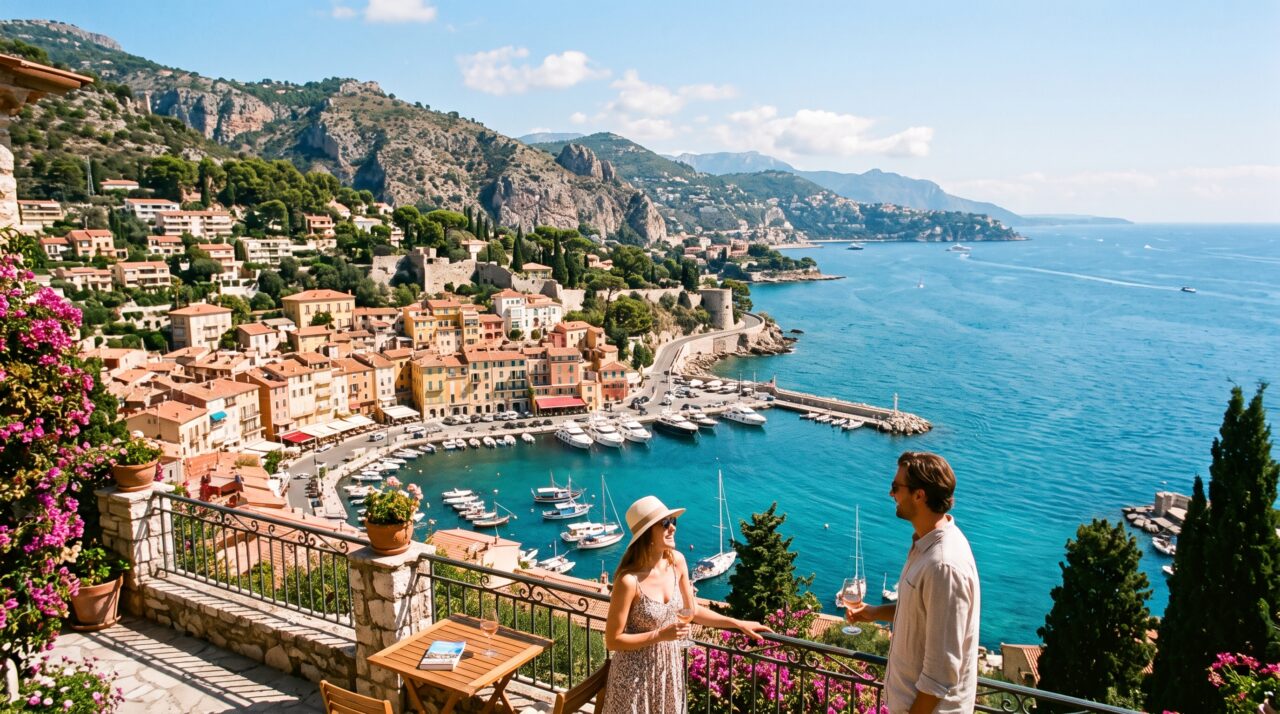
The south of France contributes its own share of iconic sites, from the Roman amphitheater in Nîmes to the medieval ramparts of Carcassonne. These locations broaden the definition of the famous landmarks in France beyond grand palaces, showing how Roman, medieval, and Mediterranean influences shaped entire regions differently than the north.
Carcassonne in particular offers a rare, largely intact example of a walled medieval city, giving visitors a tangible sense of what fortified urban life looked like centuries ago. Pairing a trip to the Riviera with inland stops like these creates a more complete picture of France’s architectural range, blending sun-soaked coastal towns with the quieter stone streets found further inland.
Loire Valley Chateaux: France’s Renaissance Legacy
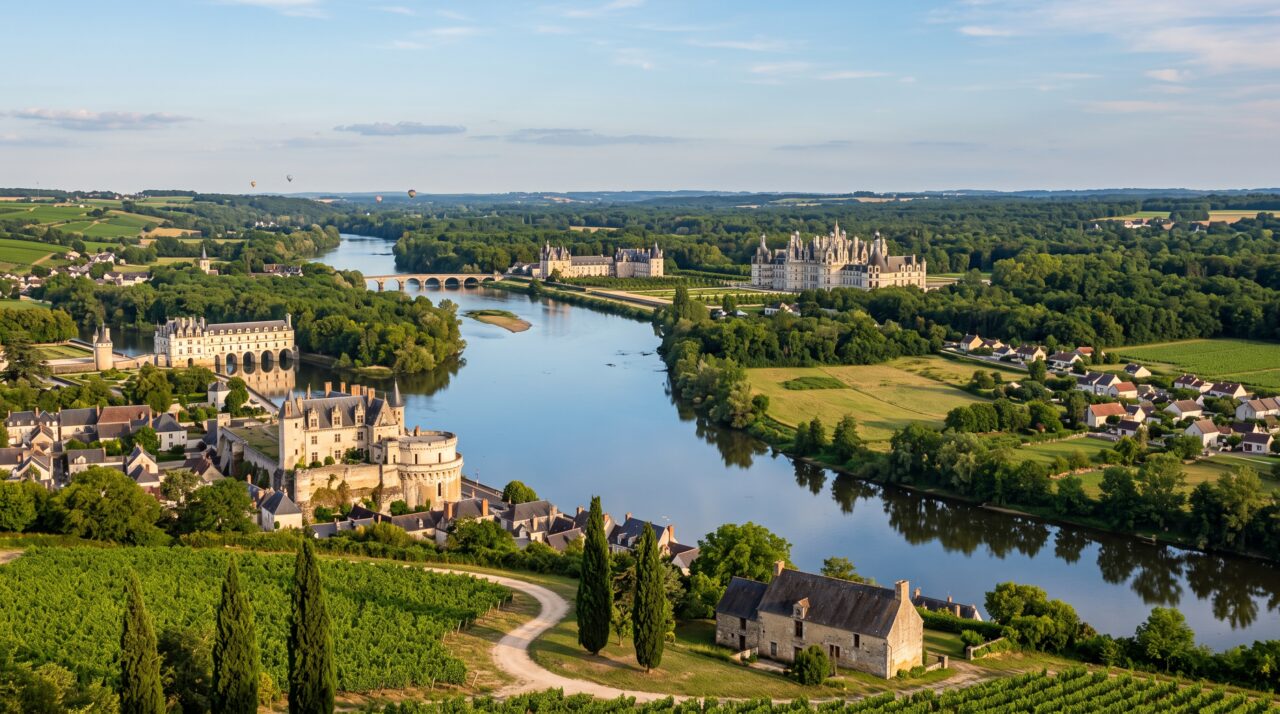
The Loire Valley is often called the garden of France, and its collection of Renaissance chateaux, including Chambord and Chenonceau, represents a distinct chapter among the famous landmarks in France. These estates were built as retreats for nobility, combining defensive medieval elements with the emerging aesthetic sensibilities of the Italian Renaissance.
Chambord’s double-helix staircase, reportedly influenced by Leonardo da Vinci’s design principles, remains a favorite detail for architecture buffs. Visiting several chateaux in sequence reveals how quickly French architectural taste evolved within a single century, shifting from fortified defensive structures toward lighter, more decorative facades built purely for pleasure.
Pont du Gard: A Roman Engineering Marvel
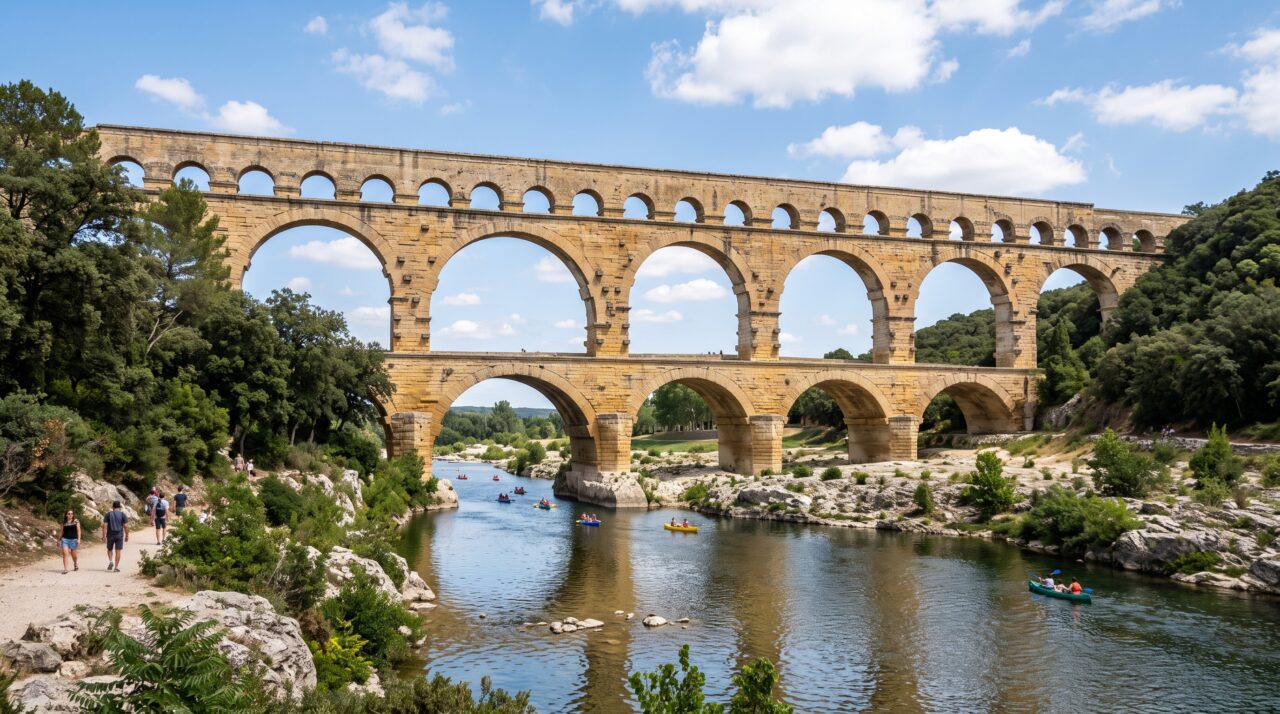
Long before Gothic cathedrals or Renaissance chateaux, Roman engineers were already leaving their mark on the French landscape. The Pont du Gard, a three-tiered aqueduct bridge near Nîmes, remains one of the best-preserved examples of Roman infrastructure anywhere in Europe and a striking reminder that iconic sites in France span far more than a single era.
Standing nearly fifty meters tall, the structure was built without mortar, relying instead on precisely cut stone blocks fitted together under immense engineering skill. Visitors today can walk across the upper level, offering a rare, hands-on connection to a piece of infrastructure that has quietly endured for almost two thousand years.
Avignon’s Papal Palace: A Medieval Power Center
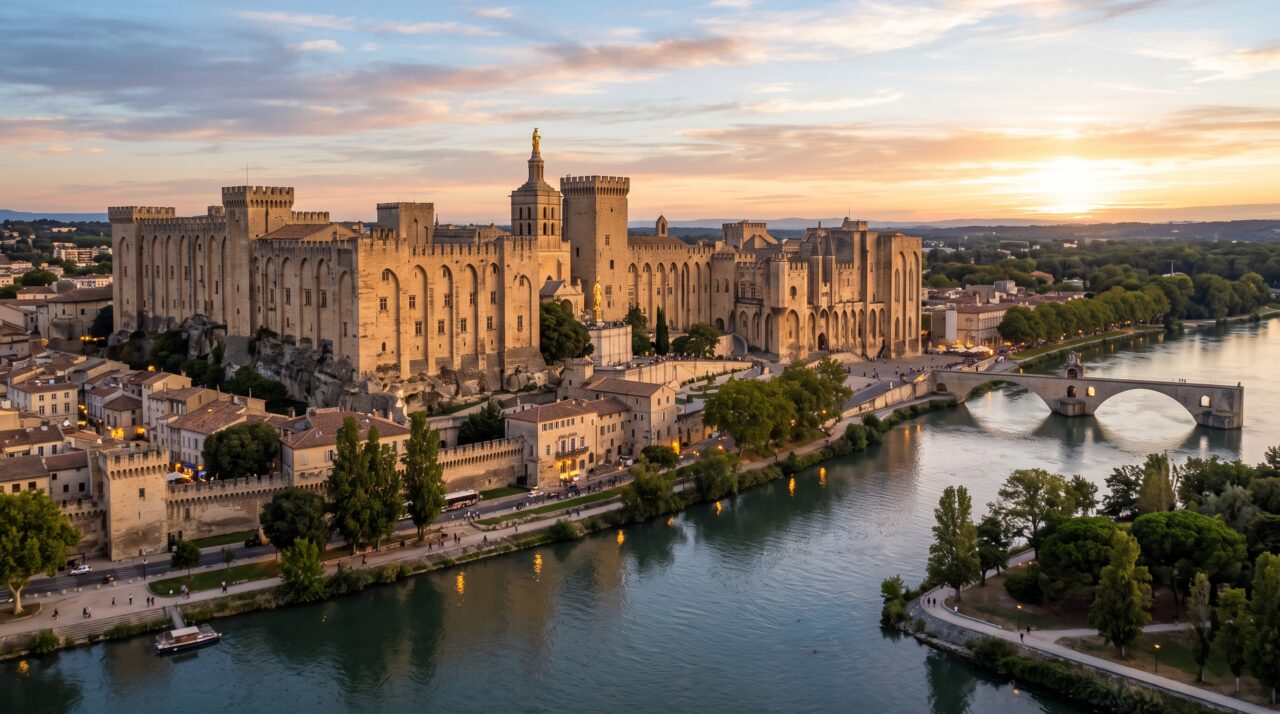
For nearly seventy years during the 14th century, Avignon rather than Rome served as the seat of the Catholic Church, and the Palais des Papes stands as physical proof of that unusual chapter in European history. As one of the largest Gothic palaces ever constructed, it offers a very different flavor among historic sites in France compared to the royal opulence of Versailles.
Walking through its vast stone halls, visitors get a strong sense of how religious and political authority once intertwined in dramatic fashion. The surrounding old town, with its intact medieval ramparts, makes Avignon a compelling stop for travelers exploring the Provence region beyond the more familiar landmarks of the north.
Strasbourg Cathedral and the Landmarks of Alsace
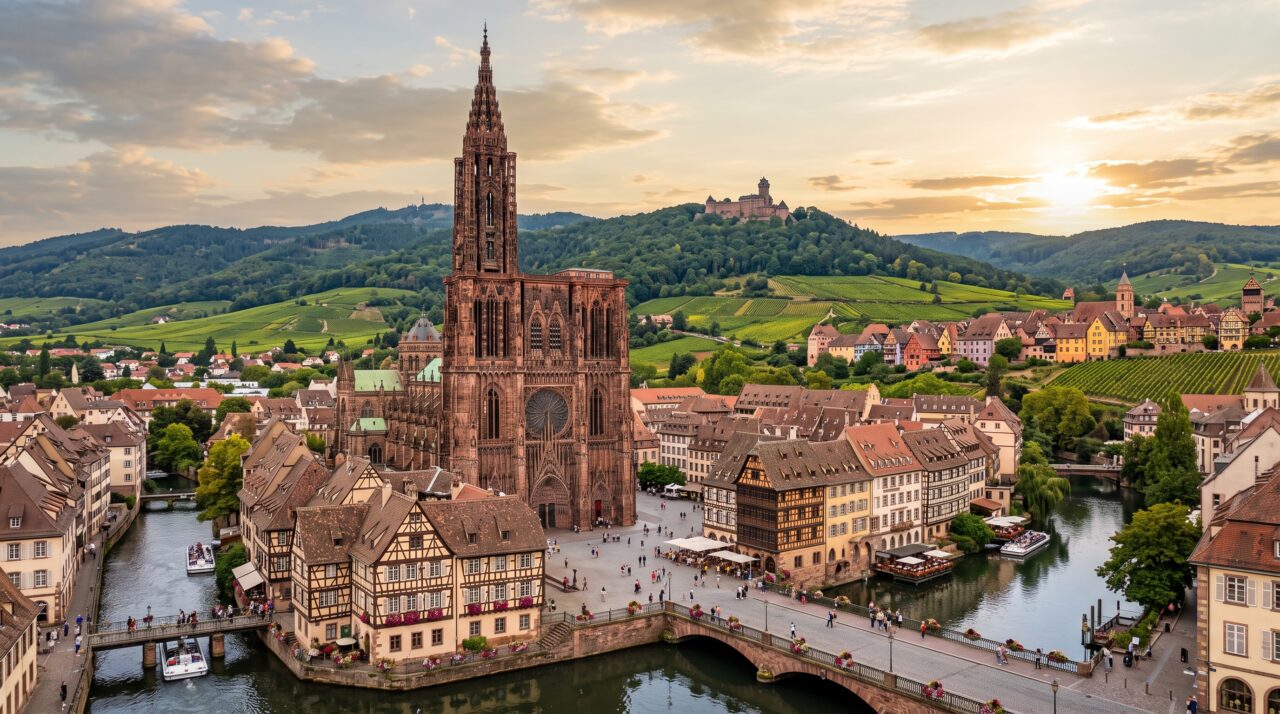
Near the German border, the Alsace region blends French and Germanic influences in ways that show up clearly in its architecture. Strasbourg Cathedral, with its single soaring spire, was once the tallest building in the world and remains one of the most photographed religious structures among France’s landmarks today.
The cathedral’s astronomical clock, an intricate mechanical marvel dating back centuries, draws crowds at noon when its figures move in sequence. Pairing a visit here with Strasbourg’s half-timbered old town gives travelers a distinctly different architectural experience from the stone grandeur found elsewhere in the country.
The Rise of Sustainable Tourism at Major Sites
As visitor numbers climb each year, many custodians of France’s most famous landmarks are rethinking how sites are managed. Timed-entry systems, visitor caps, and restoration funding tied to tourism revenue have all become more common, particularly at heavily trafficked locations like the Louvre and Mont Saint-Michel.
This shift reflects a broader trend across European heritage tourism, where preservation and accessibility are increasingly treated as complementary goals rather than competing priorities. Travelers who plan ahead and respect these newer systems tend to have a smoother, more meaningful experience overall.
Lesser-Known Landmarks Worth Adding to Your Itinerary
While the major sites understandably dominate most travel guides, France holds countless smaller landmarks that reward more adventurous travelers. The Palais Garnier opera house in Paris, the ancient theater in Orange, and the fortified village of Rocamadour all offer memorable experiences without the dense crowds found at the most famous landmarks in France.
Seeking out these quieter sites often leads to richer, less rushed encounters with history. Many seasoned travelers argue that alternating a major landmark with a lesser-known stop creates a more balanced and memorable itinerary overall.
Comparing France’s Most Iconic Sites at a Glance
Understanding how these locations differ in scale, era, and visitor experience helps travelers plan more efficient trips. The table below summarizes some of the country’s most significant sites.
| Landmark | Region | Historical Era | Best For |
|---|---|---|---|
| Eiffel Tower | Paris | 19th century | Panoramic views, photography |
| Louvre Museum | Paris | 12th century palace, 20th century pyramid | Art and history lovers |
| Notre-Dame Cathedral | Paris | 12th–13th century | Gothic architecture |
| Palace of Versailles | Île-de-France | 17th century | Royal history, gardens |
| Mont Saint-Michel | Normandy | 8th century onward | Coastal scenery, pilgrimage history |
| Carcassonne | Occitanie | Medieval | Fortified city exploration |
| Chateau de Chambord | Loire Valley | 16th century | Renaissance architecture |
UNESCO Recognition and Global Standing
Many of the sites discussed here carry UNESCO World Heritage status, a designation that reflects their outstanding universal value to humanity rather than just national pride. Mont Saint-Michel, the Palace of Versailles, and the banks of the Seine in Paris have all received this recognition, reinforcing their status among the most famous landmarks in France on a global stage.
This international designation also brings practical benefits, including funding support and stricter preservation standards that help protect these sites for future generations. For travelers, a UNESCO listing can serve as a useful signal when narrowing down which locations deserve priority on a limited itinerary, since these sites are generally held to a higher standard of upkeep and visitor management.
Family-Friendly Landmarks and Modern Attractions
Not every notable site in France dates back centuries. Disneyland Paris, located just outside the capital, has become one of the most visited attractions in Europe and offers a very different kind of experience compared to historic monuments. Families traveling with children often blend a day at Disneyland with a more traditional stop among the classic landmarks nearby.
Similarly, sites like the Cité des Sciences in Paris combine education and entertainment in ways that appeal to younger travelers. Balancing historic architecture with these modern attractions helps create a well-rounded trip that keeps visitors of all ages genuinely engaged throughout their stay.
Practical Tips for Visiting France’s Landmarks
Planning a trip around the famous landmarks in France requires a balance between ambition and realism. Many of these sites draw enormous crowds, particularly during summer months, so booking timed tickets in advance for places like the Eiffel Tower and the Louvre can save hours of waiting. Early morning or late afternoon visits also tend to offer a quieter, more comfortable experience at almost every major site.
Transportation also plays a major role in how smoothly a trip unfolds. Paris-based landmarks are easily connected by metro, but reaching Mont Saint-Michel or the Loire Valley chateaux typically requires a car or an organized tour, so factoring travel time into your itinerary prevents rushed, exhausting days.
Common Misconceptions About France’s Landmarks
A frequent misunderstanding among first-time visitors is that all major sites can be experienced in a single whirlwind day trip from Paris. In reality, destinations like Versailles or Mont Saint-Michel deserve dedicated time to be appreciated properly, and rushing often leads to a diminished experience.
Another misconception is that these landmarks are static museum pieces frozen in time. In truth, many continue to evolve, whether through restoration projects, seasonal exhibitions, or ongoing archaeological discoveries, which means even a repeat visit years later can reveal something new, from a newly opened wing to a previously hidden fresco uncovered during renovation work.
As travel writer Rick Steves has observed, “The best souvenir is the memory of a well-spent day,” a sentiment that captures why thoughtful, unhurried exploration matters more than checking sites off a list.
Regional Diversity Across the Country’s Iconic Sites
One of the most rewarding aspects of exploring France’s top attractions is noticing how dramatically the architecture shifts from region to region. Northern sites tend to favor Gothic stonework and formal royal design, while southern monuments often carry visible traces of Roman and Mediterranean influence, reflecting centuries of different rulers, climates, and available building materials.
This regional variation means that no two trips through the country’s must-see monuments ever feel repetitive. A traveler who visits the fortified walls of Carcassonne one week and the delicate stonework of a Loire Valley chateau the next comes away with a far broader understanding of how French identity has been expressed differently across time and geography.
The Cultural Significance Behind the Structures
Beyond their visual appeal, the famous landmarks in France serve as anchors for national identity and collective memory. Notre-Dame’s restoration became a unifying moment for the country, while Versailles continues to symbolize both the grandeur and the eventual downfall of absolute monarchy.
This layered symbolism is part of why these sites resonate so strongly with international visitors. They are not just backdrops for photographs but touchpoints for understanding how France has negotiated power, faith, and artistic expression across different historical periods. Even locals who pass by these monuments daily often describe a renewed sense of pride whenever restoration work or a major anniversary brings fresh attention to a site’s history.
Conclusion
France’s architectural and cultural heritage offers far more depth than a single visit can capture. The famous landmarks in France, from the towering silhouette of the Eiffel Tower to the tidal mystery of Mont Saint-Michel, each tell a distinct part of the nation’s story. Approaching these sites with curiosity, and enough time to actually absorb their history, transforms a standard sightseeing trip into a genuinely memorable journey through centuries of French achievement.
Whether your itinerary leans toward grand palaces, quiet medieval towns, or a mix of both, taking the time to understand the context behind each site will always make the experience richer than simply checking a box on a list.
Read more What Is a Penthouse Suite?
Frequently Asked Questions
What are the most famous landmarks in France?
The most famous landmarks in France include the Eiffel Tower, the Louvre Museum, Notre-Dame Cathedral, the Palace of Versailles, and Mont Saint-Michel, each representing a distinct era of French history and architecture.
How many days should I spend visiting landmarks in France?
A trip focused on major landmarks typically requires at least seven to ten days to comfortably cover Paris, Versailles, and one or two regions such as the Loire Valley or Normandy without feeling rushed, though a shorter three or four day trip can still work well if you focus purely on Paris and its immediate surroundings.
Are the famous landmarks in France expensive to visit?
Costs vary widely; some sites like Notre-Dame’s exterior are free to view, while others such as the Louvre or Chateau de Chambord require paid admission, so budgeting in advance helps manage overall trip expenses.
What is the best time of year to visit famous landmarks in France?
Spring and early autumn generally offer milder weather and smaller crowds compared to peak summer months, making them ideal for exploring popular sites at a more relaxed pace.
Can I visit Mont Saint-Michel and Paris in the same trip?
Yes, though the two locations require separate travel days since Mont Saint-Michel sits several hours from Paris by car or train, making it best suited for a multi-day regional itinerary rather than a rushed day trip.
Do I need to book tickets in advance for major landmarks?
Advance booking is strongly recommended for high-traffic sites like the Eiffel Tower and the Louvre, as walk-up lines can extend for hours, especially during peak tourist seasons, and many popular time slots sell out days or even weeks ahead of a visit.