
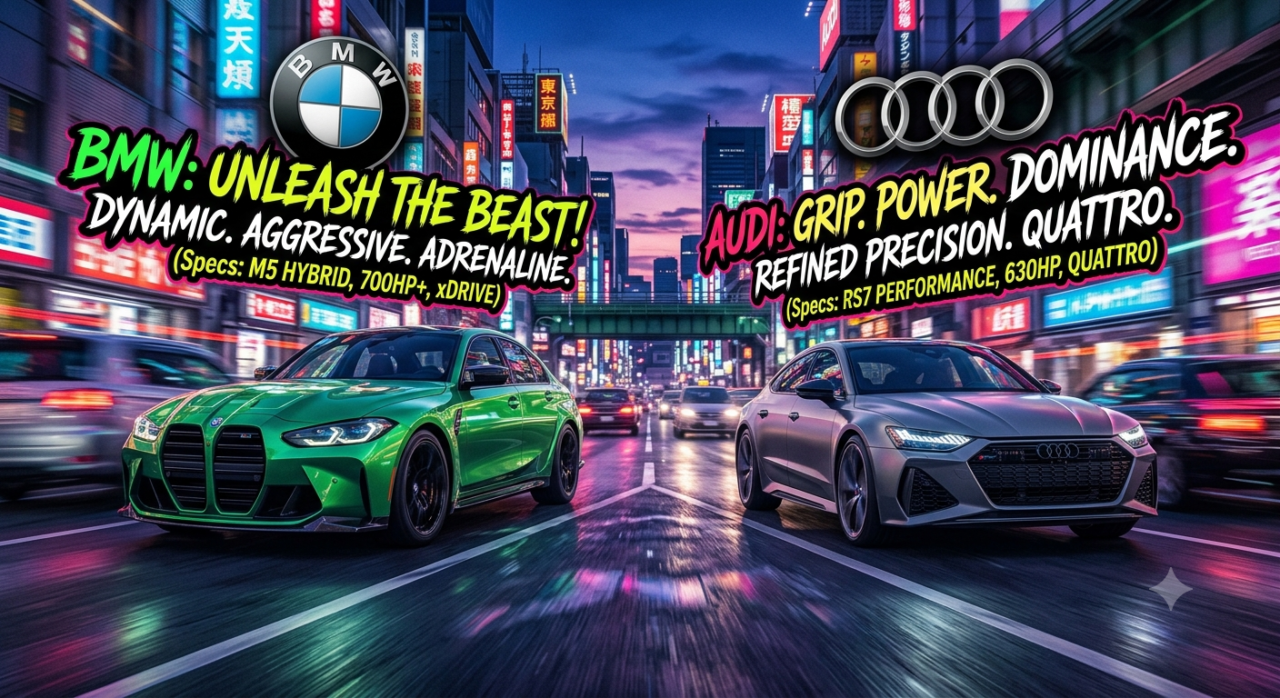

The rivalry between BMW and Audi stands as one of the most enduring debates in the automotive world. Choosing between these two German powerhouses involves more than just comparing specs; it requires understanding two fundamentally different philosophies. One brand champions driving dynamics and the visceral connection between car and driver, while the other prioritizes technological sophistication and all-weather confidence. In this comprehensive BMW vs Audi comparison, we’ll break down every critical aspect of ownership, helping you determine which prestigious marque truly fits your lifestyle and priorities.
Design and Interior Philosophy
The visual identity of each brand serves as the first point of differentiation. A BMW is unmistakable thanks to its signature “kidney” grille and angular headlight units, a design language that has evolved over decades to become a symbol of sporty prestige. Recent models like the 5 Series have adopted a more minimalist aesthetic, yet the brand’s core identity remains intact. On the other hand, Audi’s design is defined by a wide, maw-like front grille that gives its vehicles a solid, planted stance, embodying a more restrained and technical elegance .
Inside the cabin, the focus shifts from exterior flair to user experience. Audi’s interiors often lead the segment for perceived quality, featuring clear, high-contrast graphics in their Virtual Cockpit and an infotainment system that is generally praised for its logical layout and simplicity . BMW has countered by integrating a dual-screen dash-top pod in its latest models, which offers excellent definition. However, some critics feel the interface is less intuitive due to the variety of fonts and icons scattered across its menus . Ultimately, while both cabins feature premium materials and robust build quality, the BMW vs Audi interior choice often comes down to a preference for driver-focused ergonomics versus a high-tech, minimalist lounge.
Engine Lineup and Driving Dynamics
The driving experience is where the core philosophies of these brands diverge most sharply. BMW has historically built its reputation on a rear-wheel-drive layout and near-perfect 50/50 weight distribution, resulting in benchmark handling and precise steering . The brand’s legendary inline-six-cylinder engines remain a highlight, offering a beautiful balance of power and smoothness . The BMW vs Audi driving dynamic is so distinct that even base models feel sporty and engaging, encouraging a more active driver involvement .
Audi counters with a focus on composure and all-weather security, largely thanks to its Quattro all-wheel-drive system . Audis are often set up with slightly lighter controls, which can make them easier and more relaxing to drive on a daily commute . However, this focus on comfort can “rob a little of the driver engagement” that BMWs are famous for . While some entry-level Audi models can feel underpowered with a 1.5 or 2.0-litre engine in a larger car like the A4, every base BMW we’ve tried feels punchy and responsive when you need it . This fundamental distinction is a key factor in the BMW vs Audi comparison for driving enthusiasts.
Model Lineup and Trim Levels
Both brands offer an extensive and carefully structured lineup to cater to a wide range of buyers. Audi uses a logical naming system that is easy to follow, with the A series covering sedans and hatchbacks (A1 to A8) and the Q series representing SUVs (Q2 to Q8). Their performance division is split into S and RS models, with RS representing the pinnacle of Audi Sport’s capabilities . In the BMW vs Audi battle, BMW’s lineup is similarly comprehensive, with numbered series (1 to 8) for passenger cars and an X range for SUVs. Odd numbers usually denote sedans, while even numbers represent coupes and Gran Coupes .
When it comes to equipment, Audi offers popular trims like the S-Line, which provides sporty enhancements without the full performance price tag, and the Black Edition for a more aggressive aesthetic . BMW’s most popular trim is the M Sport, which gives customers design cues from the high-performance M division, including badging, wheels, and a sportier suspension . Both brands also feature dedicated electric sub-brands, with Audi’s e-tron family and BMW’s i models, signaling their commitment to the future of mobility while maintaining the distinct character that defines the BMW vs Audi rivalry.
Reliability and Long-Term Dependability
For many buyers, reliability is the deciding factor in the BMW vs Audi debate, and recent data provides a clear picture. According to the 2025 J.D. Power Vehicle Dependability Study (VDS), which measures problems after three years of ownership, BMW leads its German rivals with 189 problems per 100 vehicles (PP100). Mercedes-Benz scored 243 PP100, while Audi trailed at 273 PP100 . This data suggests that BMW has managed the increasing complexity of modern vehicles more effectively than its competitors .
The picture changes slightly when looking at maintenance costs over the long term. An analysis of CarEdge data indicates that Audi is significantly cheaper to maintain over the first 10 years of ownership, with an average cost of $10,213 compared to BMW’s $15,991. This represents a 36% cost advantage for Audi . Moreover, the chance of a major repair within that timeframe is 30.97% for Audi versus 47.11% for BMW . This creates an interesting dynamic in the BMW vs Audi ownership experience: BMWs tend to have fewer initial problems, while older Audis are generally less expensive to keep on the road once issues arise.
Cost of Ownership and Maintenance
The initial purchase price of comparable BMW and Audi models is often very close, frequently within $13,00 of each other . However, the long-term cost profile of each brand reveals a fascinating distinction. The BMW vs Audi maintenance cost debate is nuanced; while BMW generally scores better in initial reliability surveys, the cost of keeping one on the road over the long term is higher .
For BMW, the higher projected long-term costs are associated with complex turbocharged engines and xDrive all-wheel-drive systems requiring expensive servicing . Conversely, Audi’s potential for costlier surprises often stems from the complexity of its S-Tronic dual-clutch transmissions and increased oil consumption in some TFSI engine generations . Additionally, new BMWs come with a 3-year/36,000-mile complimentary scheduled maintenance plan (Ultimate Care), which edges out Audi’s new Signature Care plan offering 3 years/30,000 miles . When deciding on the BMW vs Audi financial commitment, buyers must weigh the higher maintenance costs of an aging BMW against the higher initial problem rate of an Audi.
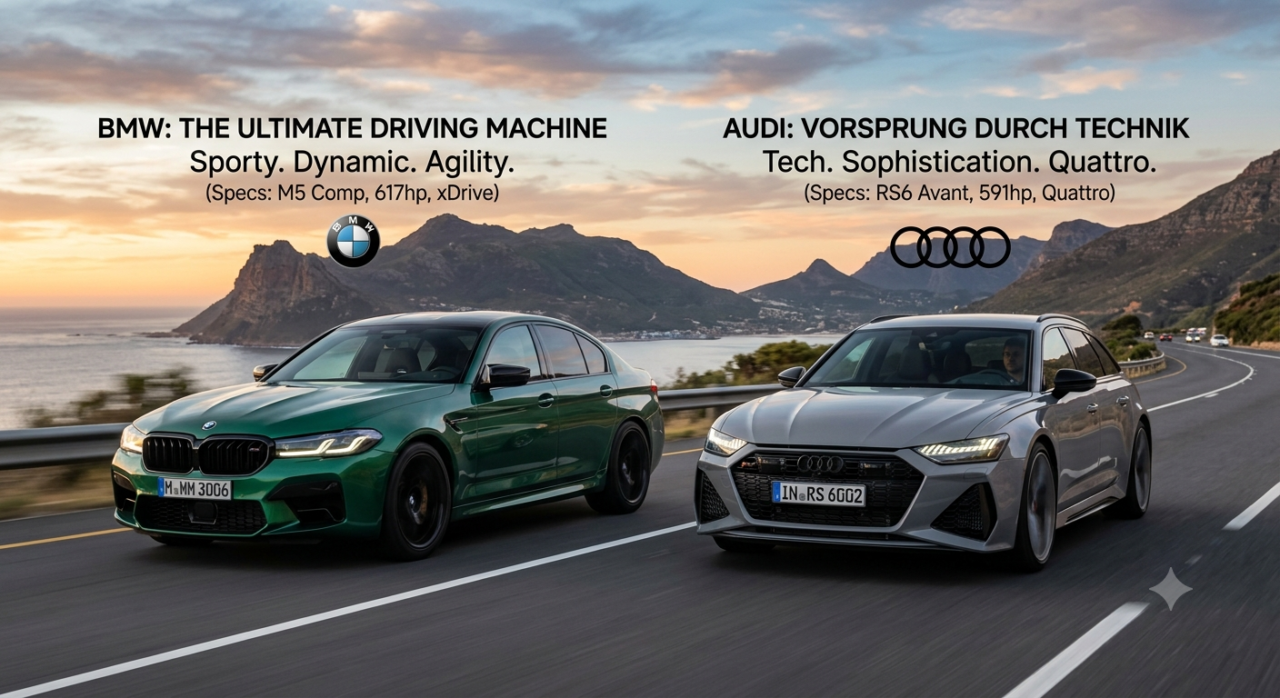
BMW vs Audi Ownership Costs Overview
| Metric | BMW | Audi | Winner |
|---|---|---|---|
| Initial Reliability (J.D. Power VDS) | 189 PP100 (Better) | 273 PP100 | BMW |
| 10-Year Maintenance Cost | $15,991 | $10,213 | Audi |
| Major Repair Chance (10 Years) | 47.11% | 30.97% | Audi |
| Complimentary Maintenance | 3 Years / 36,000 Miles | 3 Years / 30,000 Miles | BMW |
Which Brand Is Right for You?
- For the Driving Enthusiast: If you prioritize driving pleasure, sharp handling, and a responsive engine, BMW is the clear winner in the BMW vs Audi debate. The brand delivers an engaging experience that makes even a commute feel exciting.
- For the Technology and Comfort Seeker: If you value a serene cabin, cutting-edge technology, and the confidence of all-weather capability, Audi is your choice. The Quattro system and advanced interior tech make it an exceptional daily driver.
- For the Cost-Conscious Buyer: Buyers looking for lower long-term maintenance costs might find Audi more attractive despite its poorer initial reliability scores. However, those who lease or change cars frequently may prefer BMW’s stronger initial dependability .
“Ultimately, there is no definitive answer to the question of BMW or Audi. The choice depends on personal priorities: whether you are looking for maximum driver involvement or prefer technological comfort and all-weather confidence.”
Frequently Asked Questions
Is Audi more reliable than BMW?
No. According to recent data from J.D. Power’s Vehicle Dependability Study, BMW is more reliable than Audi. BMW scored 189 problems per 100 vehicles, while Audi scored 273 . However, Audi models are often significantly cheaper to maintain over the long term.
Which is cheaper to maintain, BMW or Audi?
On average, Audi is cheaper to maintain than BMW over a 10-year period. Data suggests an Audi will cost approximately $10,213 to maintain over a decade, compared to $15,991 for a BMW .
What is the main difference between BMW and Audi?
The main difference lies in their philosophy. BMW focuses on driver engagement, sporty handling, and performance, while Audi prioritizes technological innovation, high-quality interiors, and all-weather capability through its Quattro system.
How do the warranties of BMW and Audi compare?
Both brands offer a 3-year warranty, but the mileage limits differ. BMW’s three-year warranty has no mileage limit, while Audi’s is unlimited for the first two years, with a 60,000-mile limit in the third year .
Read more iPhone 18 Pro Max: Incredible Features, Price & Full Review
Which brand is better for winter driving, BMW or Audi?
Audi generally holds the edge for winter driving due to its Quattro all-wheel-drive system, which is standard on many models. While BMW offers xDrive all-wheel drive, its classic rear-wheel-drive layout (still found on many models) can be more challenging on slippery surfaces .
Conclusion
The BMW vs Audi rivalry ultimately presents a choice between two distinct and compelling visions of automotive excellence. BMW is for the driver who wants to feel the road and be actively engaged in the driving experience, valuing dynamic performance and benchmark handling. Audi is for the tech-savvy driver who appreciates a serene, high-tech interior and the confidence of all-weather traction, prioritizing refined comfort and technological innovation. Both brands are excellent, and your decision in the BMW vs Audi debate should be guided by which driving experience and ownership priorities resonate more with you.