
The 2026 tournament marks a historic milestone in soccer history, expanding across North America to showcase elite global talent on an unprecedented scale. Beyond the tactical masterclasses and pitch drama, this tournament highlights the immense commercial evolution of the sport, where elite athletes operate as multinational corporations. For fans and sports business analysts alike, tracking the financial elite reveals how much the economic landscape of football has shifted in recent years.
At the absolute summit of this financial mountain sits the highest paid player in FIFA world cup 2026, commanding an income that sets new benchmarks for professional sports. These staggering figures are no longer built solely on weekly club wages. Instead, they represent a highly sophisticated combination of Gulf-backed base salaries, groundbreaking regional revenue-sharing models, and massive global marketing portfolios that span from Silicon Valley tech giants to traditional sportswear empires.
The Absolute Leader of World Football Earnings
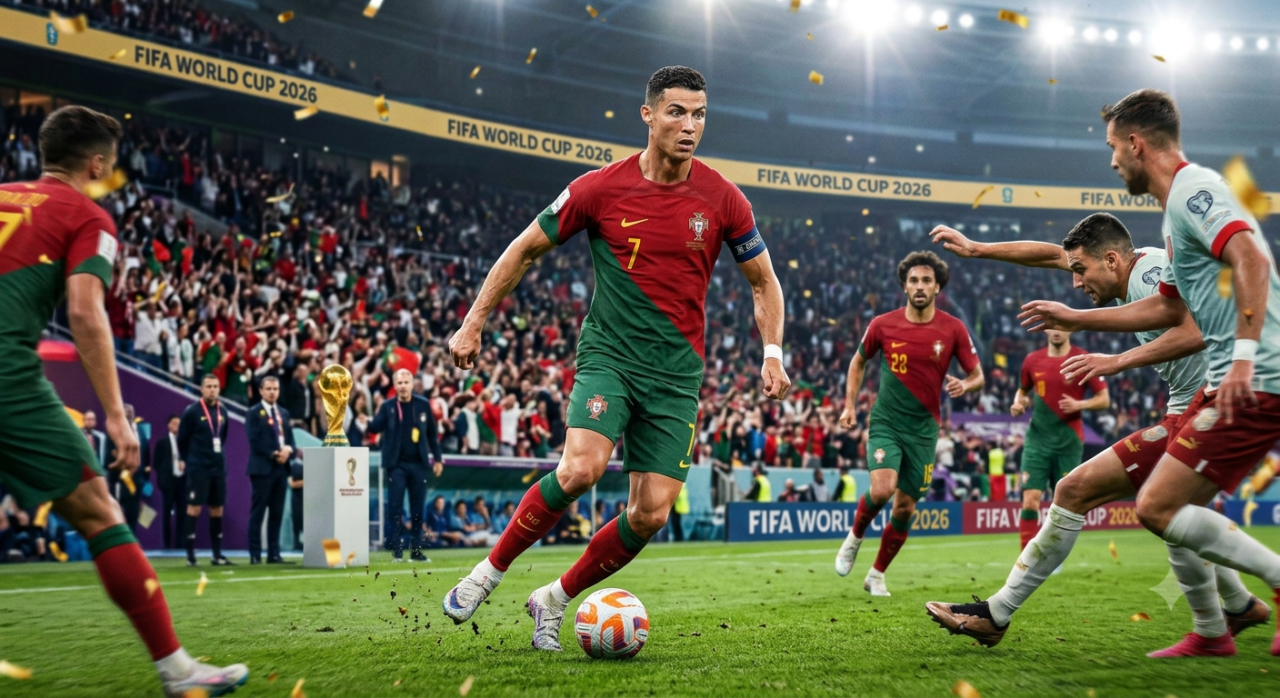
Cristiano Ronaldo claims the undisputed crown as the highest paid player in FIFA world cup 2026, pulling in a staggering $300 million over the past twelve months. At 41 years old, the Portuguese forward maintains an unprecedented level of earning power, primarily driven by his landmark playing contract with Saudi Pro League club Al Nassr, which nets him roughly $235 million in on-field compensation alone.
Beyond his historic club salary, Ronaldo pulls in an estimated $65 million annually through a highly diversified commercial portfolio. His revenue channels include long-standing partnerships, personal lifestyle brands, and a massive digital media footprint that guarantees sponsors direct access to a record-breaking global audience. Despite competing in the twilight of his career, his financial dominance remains completely unchallenged on the global stage.
The American Commercial Blueprint
Lionel Messi secures the second spot on the earnings leaderboards, arriving at the tournament with an annual income of $140 million. Since his historic move to Major League Soccer with Inter Miami, the legendary Argentine captain has reshaped how modern soccer icons monetize their careers by opting for equity and revenue-sharing over standard base salaries.
While his base playing wage is structured around $28.3 million, Messi’s true financial strength lies in unique corporate alliances with league partners like Apple and Adidas. These intricate deals allow him to capture direct percentages of subscription and merchandise growth driven by his presence. Combined with traditional commercial endorsements, this modern business framework establishes him securely right behind the highest paid player in FIFA world cup 2026.
The Next Generation of Financial Superstars
Kylian Mbappé leads the charge for the younger generation of elite talent, commanding an estimated annual income of $95 million. His high-profile move to Real Madrid solidified his status as the primary face of European club football, combining an elite tier-one salary with substantial signing bonuses and image-rights retention.
As the talismanic anchor for France, Mbappé has steadily built an impressive portfolio of global lifestyle and luxury brand endorsements. His team has focused heavily on long-term corporate relationships that reflect his broad cultural appeal across Europe and the Americas. This commercial strategy positions him as a strong candidate to eventually claim the title of the highest paid player in FIFA world cup 2026 in future tournament cycles.
Breaking Down the 2026 Financial Leaderboard
To fully comprehend the economic realities governing international football, we must analyze how these massive incomes split between direct club compensation and external corporate sponsorships. The financial elite at this tournament represent a distinct mix of established legends utilizing late-career premium contracts and young stars entering their peak marketability years.
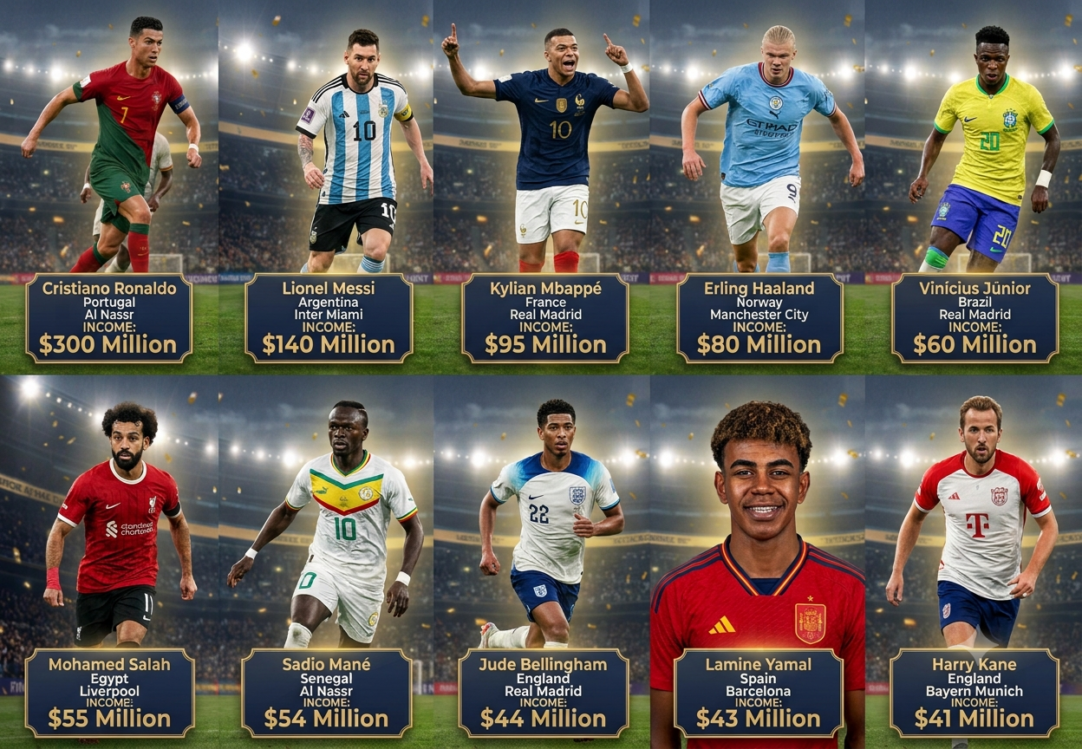
| Player | National Team | Club Team | Estimated Annual Earnings |
| Cristiano Ronaldo | Portugal | Al Nassr | $300 Million |
| Lionel Messi | Argentina | Inter Miami | $140 Million |
| Kylian Mbappé | France | Real Madrid | $95 Million |
| Erling Haaland | Norway | Manchester City | $80 Million |
| Vinícius Júnior | Brazil | Real Madrid | $60 Million |
| Mohamed Salah | Egypt | Liverpool | $55 Million |
| Sadio Mané | Senegal | Al Nassr | $54 Million |
| Jude Bellingham | England | Real Madrid | $44 Million |
| Lamine Yamal | Spain | Barcelona | $43 Million |
| Harry Kane | England | Bayern Munich | $41 Million |
Evaluating this distribution clarifies why the highest paid player in FIFA world cup 2026 can outpace the rest of the field by such a wide margin. The combination of an elite Saudi contract and a global personal brand creates a financial tier that standard European club structures simply cannot match under current financial sustainability regulations.
Nordic Efficiency and the Premier League Premium
Erling Haaland occupies the fourth position globally, generating $80 million annually as he leads Norway back onto the world stage. The Manchester City striker benefits from one of the most lucrative base-and-bonus packages in English Premier League history, rewards earned through his consistent, record-breaking goal-scoring output in domestic and European competitions.
Off the pitch, Haaland’s financial profile has expanded rapidly through a monumental multi-year boot deal with Nike alongside premium lifestyle partnerships. His focused, performance-driven public image appeals directly to major global corporations looking for authentic athletic excellence. This highly optimized commercial approach ensures he remains within striking distance of the highest paid player in FIFA world cup 2026 parameters.
South American Flair and Real Madrid’s Market Power
Vinícius Júnior stands firmly as Brazil’s chief financial and athletic figurehead, earning an impressive $60 million over the last year. His ascendancy to global superstardom at Real Madrid has triggered substantial contractual upgrades, reflecting his role as one of the most dangerous and watchable wingers in modern football.
The young Brazilian has successfully converted his spectacular pitch performances into a powerful commercial network, anchoring major international campaigns against racism while promoting top-tier tech, fashion, and gaming brands. His immense popularity across South America and Europe makes him an incredibly valuable asset for corporate sponsors. This soaring corporate value keeps him firmly in the conversation when discussing the highest paid player in FIFA world cup 2026.
Iconic African Ambassadors on the Global Stage
Mohamed Salah and Sadio Mané continue to demonstrate the massive global appeal and earning capacity of African football’s elite icons. Salah commands $55 million annually, utilizing his legendary status at Liverpool and unmatched cultural significance across the Middle East and Africa to secure premier international corporate sponsorships.
Meanwhile, Sadio Mané tracks closely at $54 million, a total heavily boosted by his lucrative move to partner the highest paid player in FIFA world cup 2026 at Al Nassr. This career move significantly amplified his direct on-field compensation while allowing him to sustain vital philanthropic initiatives in his native Senegal. Both players demonstrate how elite sporting success can be leveraged into true generational wealth and profound global influence.
The Rising Stars Disrupting the Elite Financial Tier
The economic landscape of modern football is shifting rapidly, evidenced by the sudden emergence of Jude Bellingham and Lamine Yamal in the top ten earnings list. Bellingham, at just 22 years old, brings in $44 million, driven by his spectacular introductory seasons at Real Madrid and a booming commercial appeal that has made him the preferred face of British sportswear campaigns.
Remarkably, Spain’s 18-year-old sensation Lamine Yamal enters the elite rankings at $43 million, a staggering figure for a teenager. Despite facing recent injury challenges, his historic breakthrough with Barcelona and the Spanish national team sparked an immediate wave of high-value corporate deals. The rapid financial rise of these young stars proves that companies are willing to invest premium capital into the future, narrowing the financial gap toward the highest paid player in FIFA world cup 2026.
Explaining the Economic Architecture Behind the Numbers
“The modern elite footballer is no longer just an employee of a sports club; they are a walking media conglomerate,” notes sports business analyst Marcus Vance. “The massive delta we observe between standard player wages and the highest paid player in FIFA world cup 2026 boils down to geographic flexibility and the mastery of intellectual property rights over multiple territories.”
This perspective highlights the fundamental shift in how top-tier athletic wealth is generated. Traditional club contracts now serve primarily as a baseline financial foundation for these global icons. The true separation in wealth accumulation happens when an athlete can successfully command international attention, turning social media metrics and global visibility into recurring commercial equity.
Traditional European Clubs versus Emerging Markets
A clear geographical divide has emerged within the top ten financial rankings, splitting the world’s best talent between elite European leagues and ambitious global buyers. While traditional powerhouses like Real Madrid, Manchester City, and Barcelona offer substantial competitive prestige and solid base wages, they must operate within strict financial fair play parameters.
In contrast, the financial packages offered in the Saudi Pro League or via complex North American corporate alliances offer unprecedented capital growth. This allows late-career legends to achieve completely unparalleled earnings heights. This structural reality explains how the highest paid player in FIFA world cup 2026 can maintain such an immense financial lead over active players operating in traditional European environments.
The Role of Modern Endorsements and Digital Media
In the current media ecosystem, a player’s earning potential is deeply intertwined with their direct digital reach and personal media networks. The top earners at this tournament command total social media followings that surpass the populations of most major nations, granting corporate sponsors immediate global exposure.
These digital footprints have completely transformed standard endorsement strategies, moving from simple television advertisements to complex equity stakes, personal footwear lines, and individual content production companies. This paradigm shift enables top-tier athletes to sustain massive income levels independently of their weekly athletic performances. It fundamentally changes what it takes to become the highest paid player in FIFA world cup 2026.
Future Projections for the International Football Market
Looking ahead, the financial metrics established during this tournament cycle are highly likely to become the baseline standards for the next generation of talent. As international broadcasting rights continue to expand and new corporate investment groups enter the sport, player valuations will inevitably scale upward.
Young stars currently sitting in the middle tiers of the top ten will likely command much higher base packages when their next contract renewals arrive. The convergence of tech streaming platforms, international club tourism, and expanding tournament formats guarantees that future revenue streams will continue to grow, paving the way for a new highest paid player in FIFA world cup 2026 contender to break further financial barriers down the line.
Summary of the 2026 World Cup Financial Hierarchy
Ultimately, the financial rankings heading into this tournament reflect a fascinating transition period within the sport. The enduring marketability of iconic legends continues to dominate the top positions, demonstrating the long-term value of sustained global excellence. simultaneously, the rapid financial rise of teenage talents indicates that the commercial market is adjusting quickly to embrace the next generation of superstars.
As the tournament matches unfold across North America, these financial valuations will be tested against the ultimate standard of on-pitch success. Whether driven by Gulf contracts, innovative American revenue shares, or traditional European club packages, the wealth on display highlights soccer’s undisputed position as the world’s premier entertainment property. The battle to be named the highest paid player in FIFA world cup 2026 is a vivid testament to that reality.
Frequently Asked Questions
Who is the highest paid player in FIFA world cup 2026?
Cristiano Ronaldo is the absolute highest paid player in FIFA world cup 2026, earning an estimated total of $300 million over the past 12 months through his lucrative Al Nassr contract and extensive global endorsement deals.
How much does Lionel Messi earn compared to the highest paid player in FIFA world cup 2026?
Lionel Messi earns an estimated $140 million annually with Inter Miami and his commercial partners, placing him second on the global list behind Cristiano Ronaldo’s leading $300 million mark.
Why does the highest paid player in FIFA world cup 2026 make so much more than European league stars?
The massive financial gap exists because Cristiano Ronaldo benefits from an extraordinary, tax-advantaged playing contract in Saudi Arabia worth $235 million on-field, a figure that traditional European club wage structures cannot match due to strict financial regulations.
Are there any teenagers close to the earning power of the highest paid player in FIFA world cup 2026?
While still far from the top spot, 18-year-old Lamine Yamal of Spain has broken into the top ten elite earners, commanding an impressive $43 million annually due to his rapid rise with Barcelona and major new corporate sponsorships.
Read more Ice Hotel Experience: The Ultimate Guide to Sleeping in a Hotel Made of Ice
Do these tournament earnings for the highest paid player in FIFA world cup 2026 include national team bonuses?
No, the listed figures are calculated based on the players’ standard 12-month club salaries and commercial endorsement portfolios, as national team tournament bonuses represent a minor fraction of their total annual income.
For a deeper look into how these massive contracts are structured and the business decisions driving modern sports entertainment, watch this 2026 Football Wealth Analysis. This breakdown provides excellent visual context regarding the evolving corporate side of international soccer.