
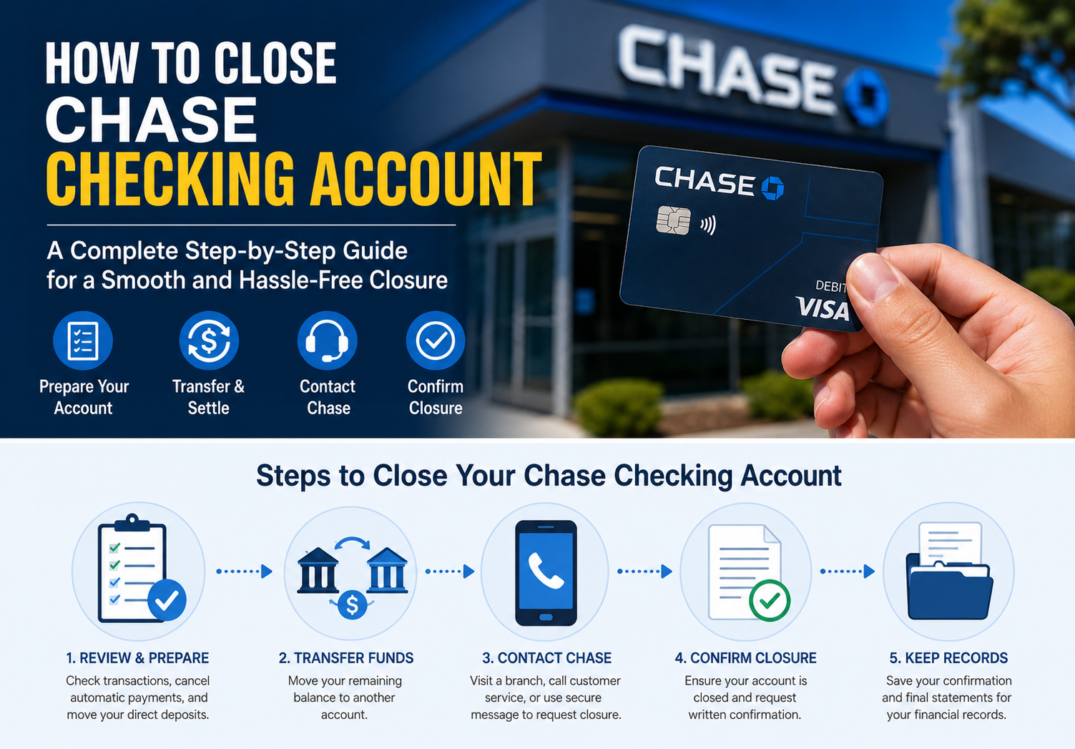

Closing a bank account may seem straightforward, but doing it incorrectly can lead to unexpected fees, rejected payments, or missing deposits. If you’re wondering how to close Chase checking account, understanding the correct process can save time, protect your finances, and ensure a smooth transition to another bank.
Whether you’re switching financial institutions, simplifying your banking, reducing monthly fees, or no longer need the account, this comprehensive guide explains every step in detail. You’ll learn the available closure methods, preparation tips, common mistakes, timelines, and answers to frequently asked questions so you can confidently manage the entire process.
Why People Decide to Close a Chase Checking Account
Many customers research how to close Chase checking account because their financial needs have changed. Some move to banks with lower fees, better interest rates, stronger digital banking tools, or more convenient local branches. Others simply want fewer accounts to manage or are consolidating their finances after a life change.
Closing an account is also common after relocating, opening a joint account elsewhere, or choosing an online bank with enhanced budgeting features. Whatever the reason, understanding the process before initiating closure helps avoid unnecessary complications and ensures all financial obligations are properly handled.
What to Do Before Closing Your Account
Preparation is the most important part of learning how to close Chase checking account successfully. Start by reviewing recent transactions, identifying recurring subscriptions, and making a list of direct deposits, automatic bill payments, and linked financial services connected to the account.
Next, transfer your remaining balance to another account, allow outstanding transactions to clear, and download bank statements you may need for future tax preparation or financial records. Taking these simple precautions greatly reduces the risk of payment interruptions or unexpected account activity after closure.
Ways You Can Close a Chase Checking Account
Customers have several options when deciding how to close Chase checking account, depending on convenience and personal preference. You can visit a local branch, call customer support, send a secure message if eligible, or in certain circumstances submit a written request according to current bank procedures.
Each method follows similar verification requirements to confirm your identity and ensure the account owner authorizes the closure. Choosing the most appropriate option depends on your location, account status, and whether the account has a remaining balance or pending transactions.
Step-by-Step Process to Close the Account Properly
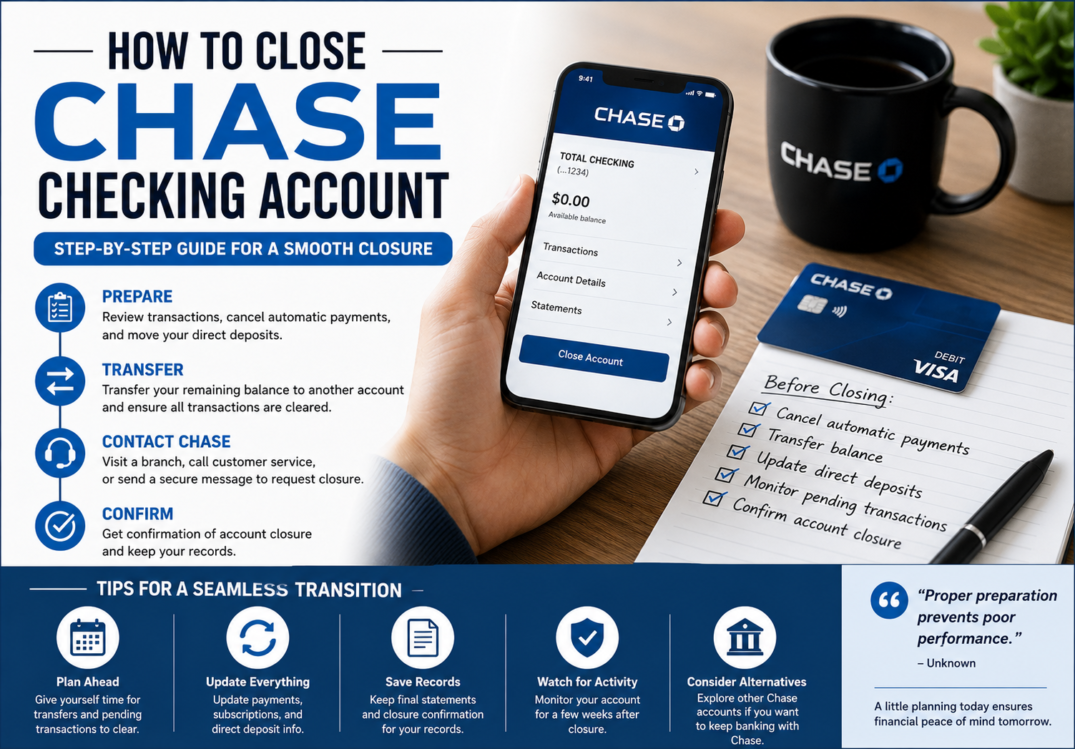
Understanding how to close Chase checking account becomes much easier when following a logical sequence. First, open your replacement account, redirect all income deposits, move scheduled payments, transfer your remaining funds, and verify that every pending transaction has successfully cleared.
Once everything has settled, contact Chase using your preferred method and request account closure. Ask for written confirmation whenever possible and monitor your old account for several weeks afterward to ensure no unexpected activity appears before considering the process completely finished.
Comparison of Account Closure Methods
The table below compares the most common ways customers complete the process.
| Closure Method | Best For | Processing Speed | Identity Verification | Advantages | Possible Drawbacks |
|---|---|---|---|---|---|
| Visit a Branch | Immediate assistance | Usually same day | In person | Personal guidance and instant questions | Requires travel |
| Phone Support | Most customers | Usually same day | Security questions | Convenient from home | Longer wait times possible |
| Written Request | Special circumstances | Several business days | Signature verification | Useful if unavailable by phone | Slower processing |
| Secure Online Communication (where available) | Existing online banking users | Varies | Logged-in account verification | Convenient and documented | Availability may differ |
Choosing the right option depends on your individual situation rather than one universally superior method. Customers with complex account activity often benefit from speaking directly with a representative who can verify that everything has been completed correctly.
Common Mistakes That Delay Account Closure
One of the biggest mistakes when learning how to close Chase checking account is forgetting about automatic payments. Streaming subscriptions, insurance premiums, utility bills, and loan payments may continue attempting withdrawals even after you believe the account is inactive.
Another common error is closing the account before receiving your final paycheck, tax refund, or government benefit deposit. Allowing enough time for all incoming and outgoing transactions to finish greatly reduces the likelihood of overdrafts, returned payments, or administrative complications.
Are There Any Fees or Requirements?
Many people researching how to close Chase checking account worry about closure fees. In many situations, there is no fee simply for closing a checking account, although account terms, promotional offers, and timing can affect individual circumstances.
Customers should also review any minimum balance commitments, recently earned bonuses, or account agreements before requesting closure. Reading the applicable terms ensures there are no unexpected conditions that could affect the final balance or account status.
How Long Does the Closure Process Take?
The time required for how to close Chase checking account depends on the account’s activity and the closure method selected. Straightforward accounts without pending transactions may close on the same day after identity verification is completed.
Accounts with unresolved payments, pending debit card purchases, or outstanding checks may require additional processing time. Monitoring your account until the official closure is confirmed provides peace of mind and helps identify any unexpected activity before the process is finalized.
What Happens After Your Account Is Closed?
After completing how to close Chase checking account, your debit card generally becomes inactive, online access may change, and future transactions directed to the account can be rejected or returned depending on the payment type and timing.
Keep copies of confirmation documents, final statements, and closure correspondence for your financial records. These documents can prove valuable if questions arise regarding previous transactions, tax reporting, or future banking verification requirements.
Alternatives to Closing Your Chase Checking Account
Sometimes permanently closing an account is not the best solution. Before deciding how to close Chase checking account, consider whether switching to another account type within the same bank better matches your current financial needs.
Changing account features, reducing monthly service fees through eligibility requirements, or maintaining the account as a secondary checking option may provide flexibility without requiring a complete banking transition. Evaluating these alternatives can help you make a more informed financial decision.
Expert Tips for a Smooth Banking Transition
Financial planning professionals often recommend maintaining both your old and new checking accounts simultaneously for several weeks. This overlap creates a safety buffer while automatic payments and direct deposits transition to your new banking relationship.
As financial educator Dave Ramsey has said, “A budget is telling your money where to go instead of wondering where it went.” The same principle applies to bank account transitions—careful planning prevents unnecessary financial surprises and helps ensure every payment reaches its intended destination.
Conclusion
Learning how to close Chase checking account is less about filling out paperwork and more about preparing your finances for a seamless transition. By updating automatic payments, moving direct deposits, transferring your remaining balance, and verifying account closure, you minimize the risk of unexpected fees or payment interruptions.
Whether you’re switching to a different financial institution or simplifying your banking, taking a deliberate, organized approach makes the process significantly easier. Following the guidance outlined above will help you close your account confidently while protecting your financial records and maintaining uninterrupted access to your money.
FAQ
How do I how to close Chase checking account without visiting a branch?
You can often complete how to close Chase checking account by contacting customer service by phone or using another approved communication method after verifying your identity.
Can I close my Chase checking account online?
Depending on your account and available services, certain online communication options may be available, although many customers complete how to close Chase checking account by phone or in person.
Should I empty the account before closing it?
Yes. Before beginning how to close Chase checking account, transfer your remaining balance and ensure all pending transactions have fully cleared.
Will closing my checking account affect my credit score?
Generally, how to close Chase checking account does not directly affect your credit score because checking accounts are not traditional credit products.
What documents should I keep after closing the account?
After completing how to close Chase checking account, keep your final bank statements, account closure confirmation, and any related correspondence for future financial reference.
Read more Grand Hyatt Nashville: A Complete Guide to Luxury Stay, Dining, Events, and Downtown Experience
Can I reopen my Chase checking account after closing it?
Once you complete how to close Chase checking account, reopening the exact account may not always be possible. In many cases, you would need to apply for a new checking account if you wish to bank with Chase again.